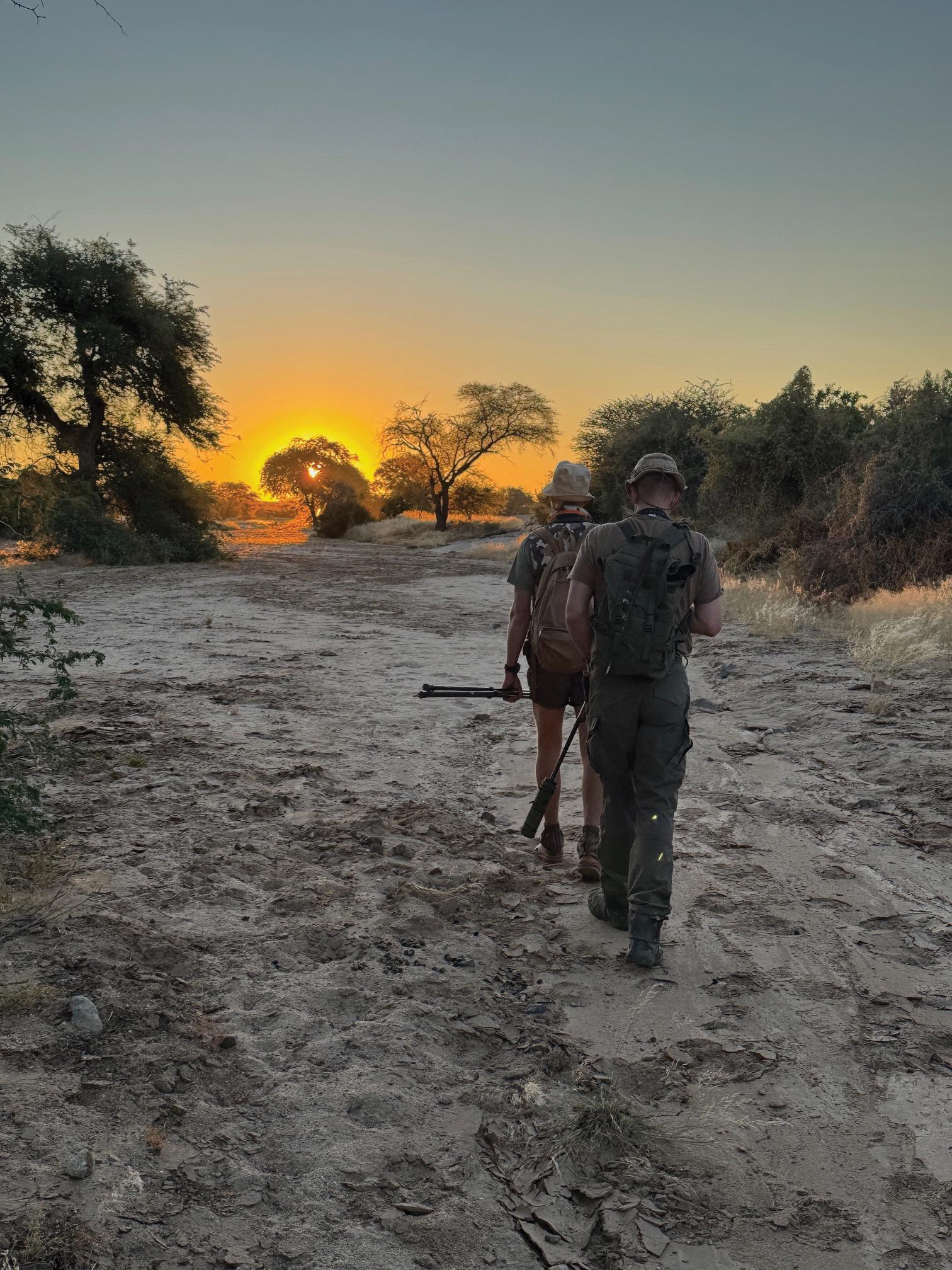
Experiencing intense moments in nature, embracing physical exertion and deprivation as a challenge in order to come to know hunting in a way that is rarely possible in today’s hunting grounds in Germany. This was the motivation for my hunting companion Holger and me to travel to Namibia.
The focus of our hunt would not be the trophy itself, but the journey to bagging it. It was to be a challenging journey with many kilometres of stalking, without technical aids or any frills. Hunting behind a game-proof fence, shooting from a car or sitting in hides at waterholes were completely out of the question for us, and the venison we were going to harvest was to be fully utilised…
And so it happened that we got in touch with professional hunter Hagen Denker. The way he outlined the hunting process, and the prospect of a sustainable and purist wilderness hunt convinced us. Hagen met us at Hosea Kutako International Airport in Windhoek, and thus started an eleven-day adventure in his excellent, truly allround care.
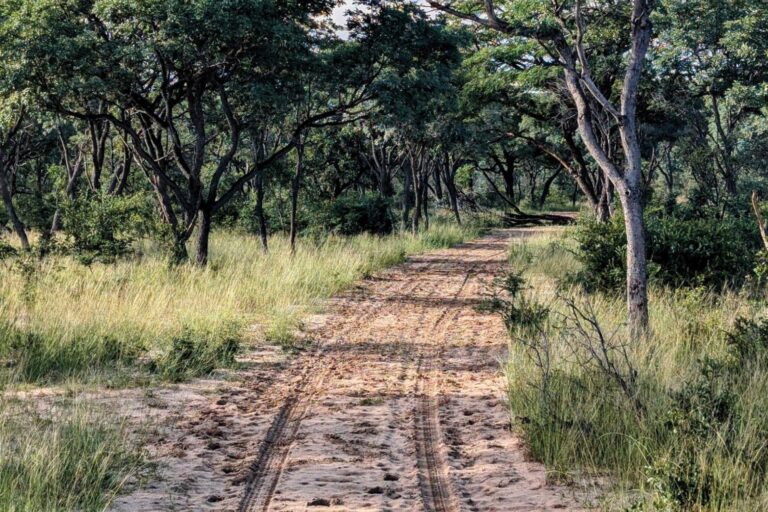
The 2.5 hours’ drive to Ameib in his white Toyota 4×4, a ubiquitous brand on Namibia’s roads, gave us an opportunity to get acquainted. Ameib, the Green Place, is the guest farm of the Denker family, adjacent to the 14000 hectare Reficiens Private Hunting Concession. As darkness fell, we got into a 1973 Series 3 Land Rover with single cab and open loading space. We drove through the bush, dimly lit by the headlights, along barely visible paths, through dry riverbeds and between rocks for a good half hour until we reached the hunting camp, the long-awaited destination of our journey.
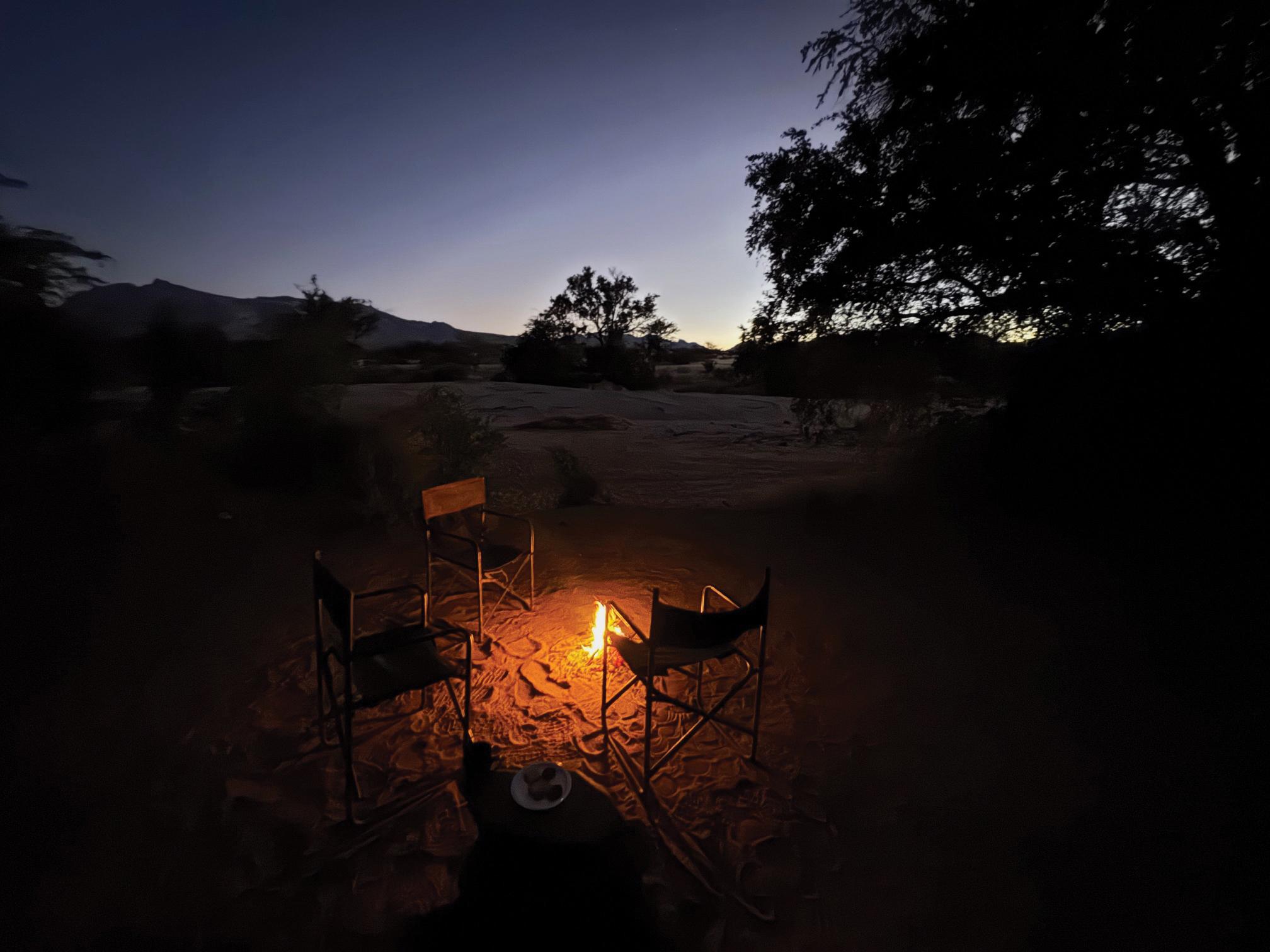
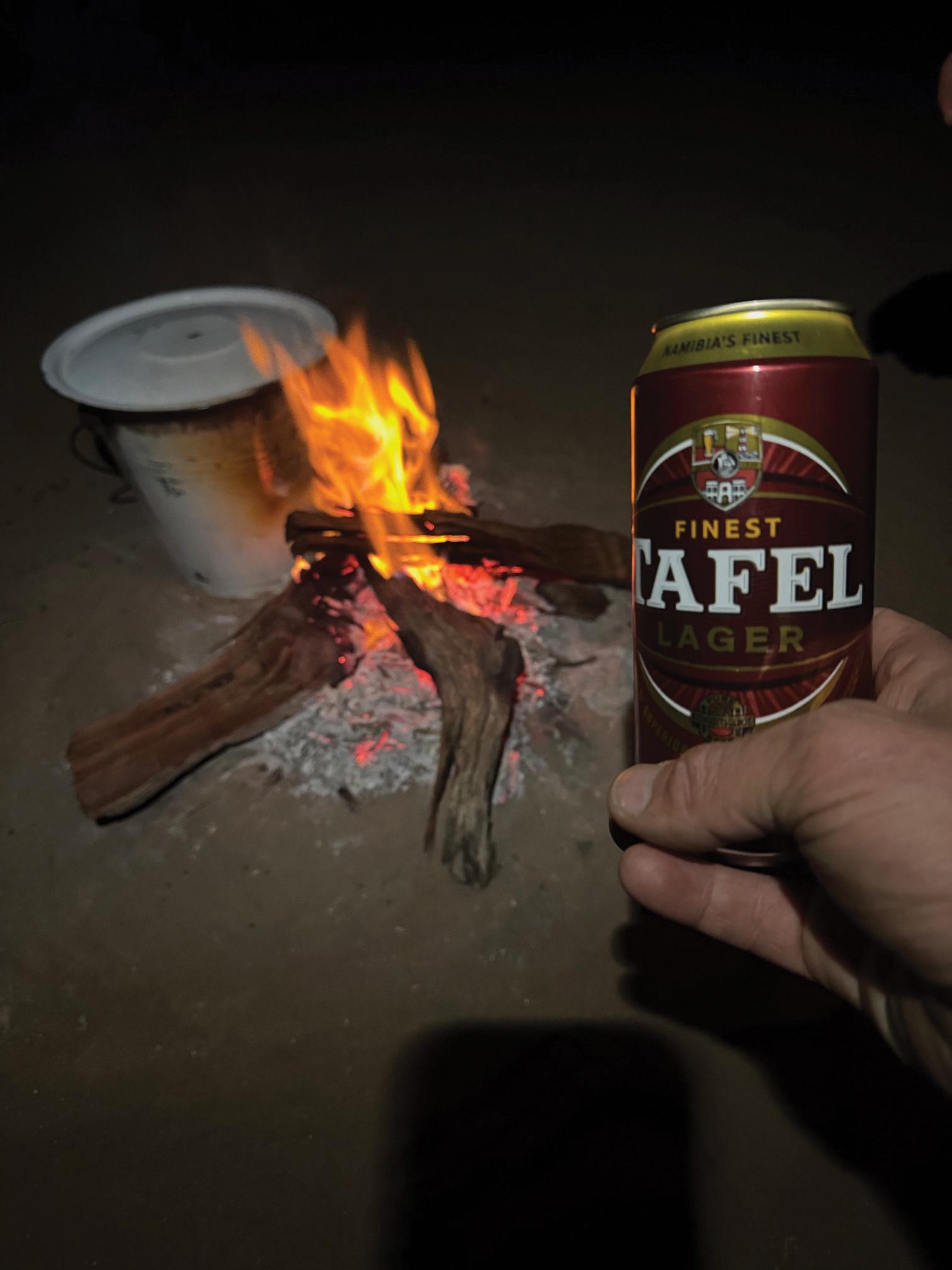
The campfire, built of the very hard and longsmouldering camel thorn wood, was already burning, tended by camp assistant Butti, who was to take very good care of us in the days to come. Above us, the magnificent constellation of the Southern Cross was shining against the backdrop of the Milky Way – we felt like strangers but somehow also at home.
The wake-up call on the first day of stalking was at 5:40. We gathered at the campfire and started the day with strong coffee and a chunky rusk. A cheerful exuberance for the unknown took hold of us – stalking in the African bush for the first time. What would we encounter? Everything would be real, no zoo, no safari park.
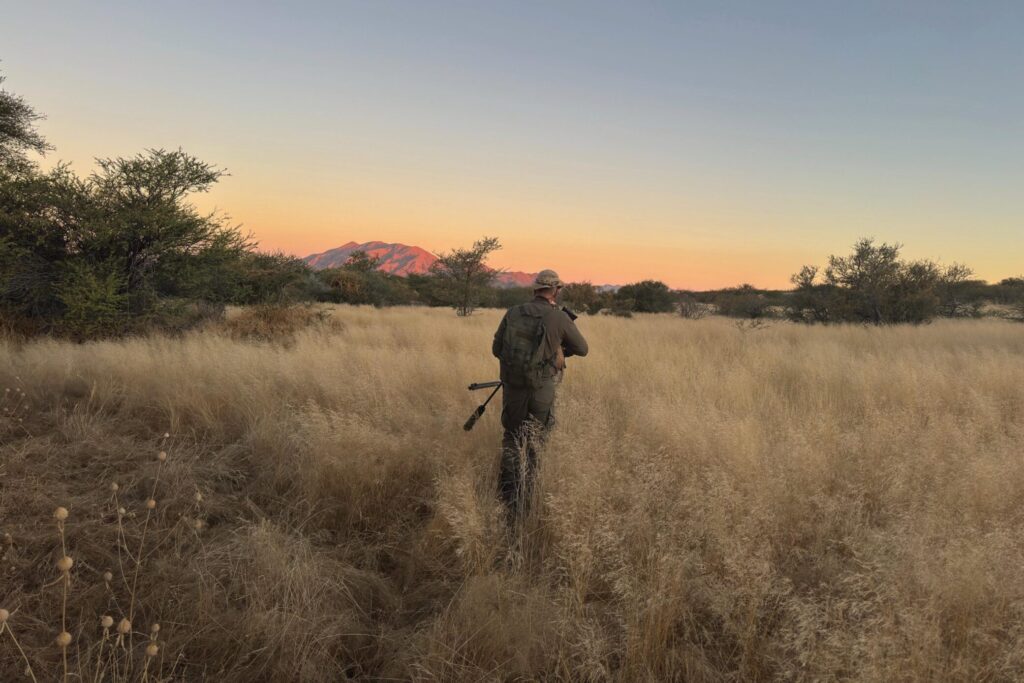
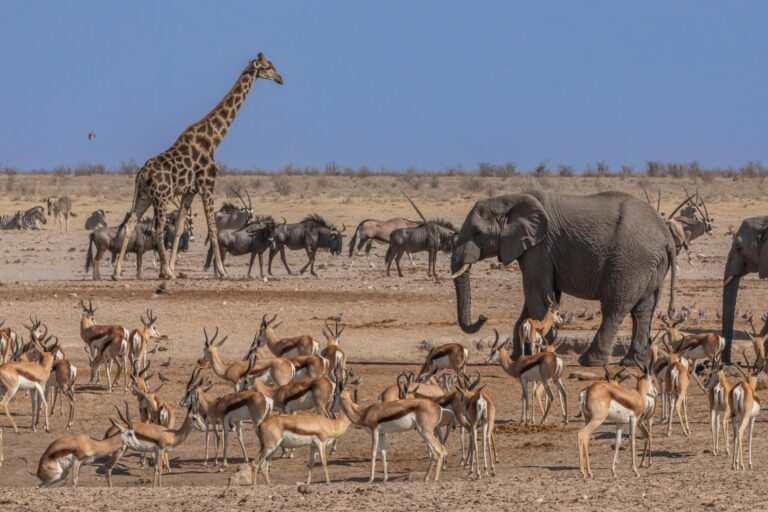
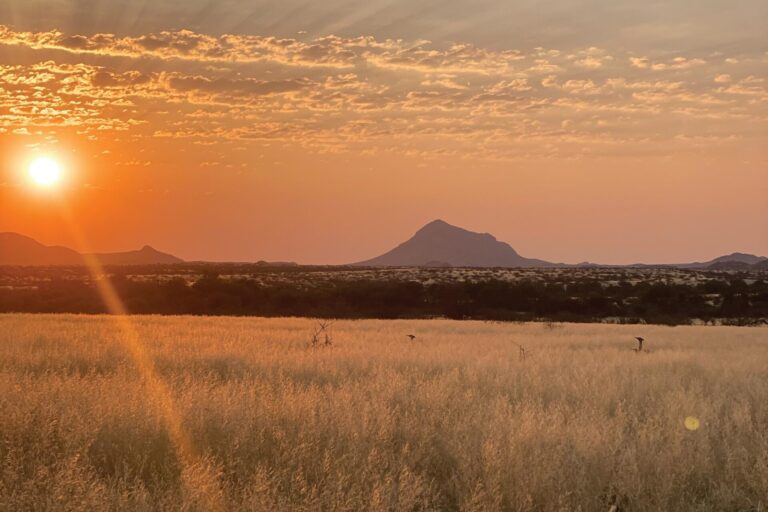
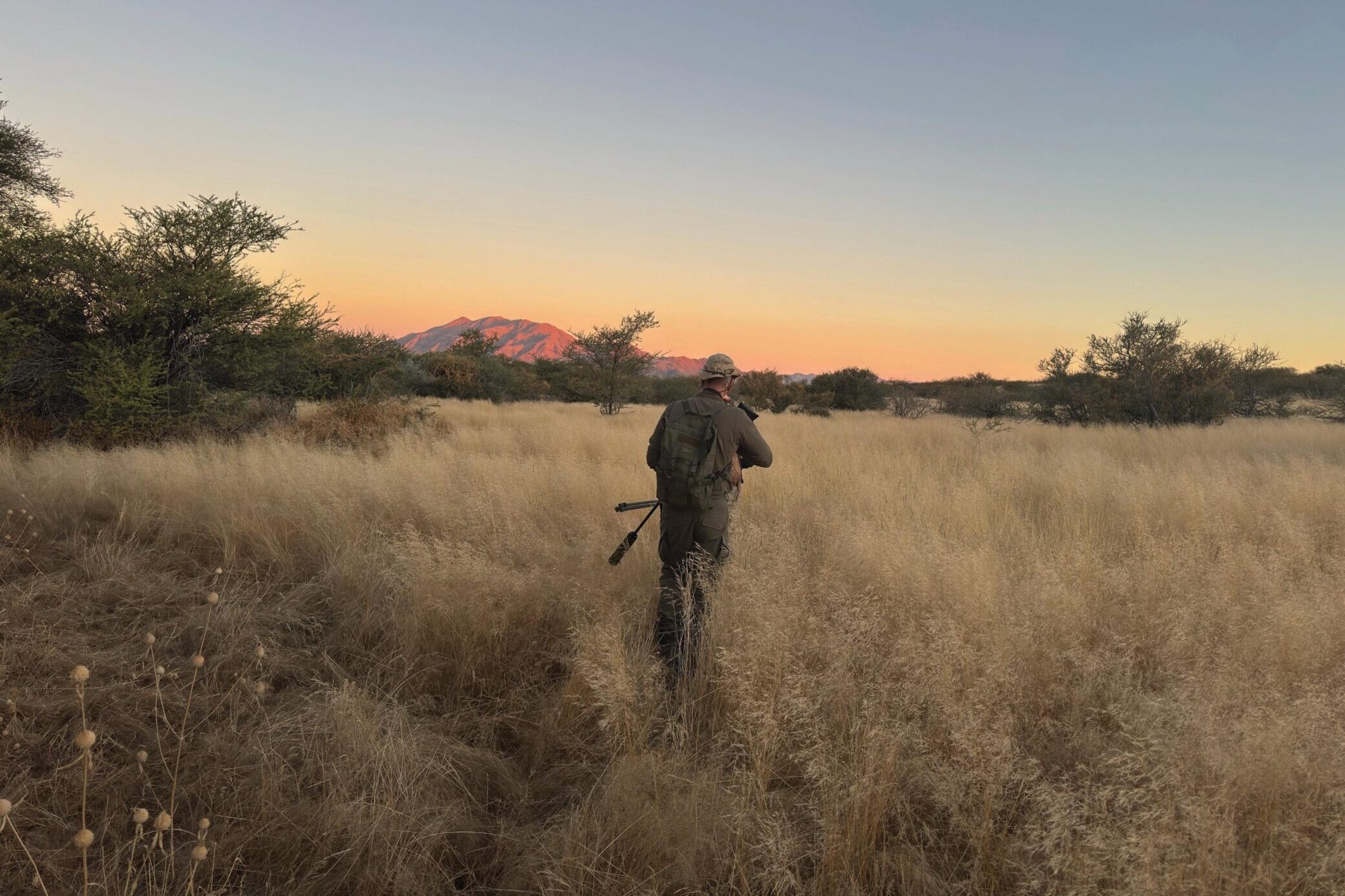
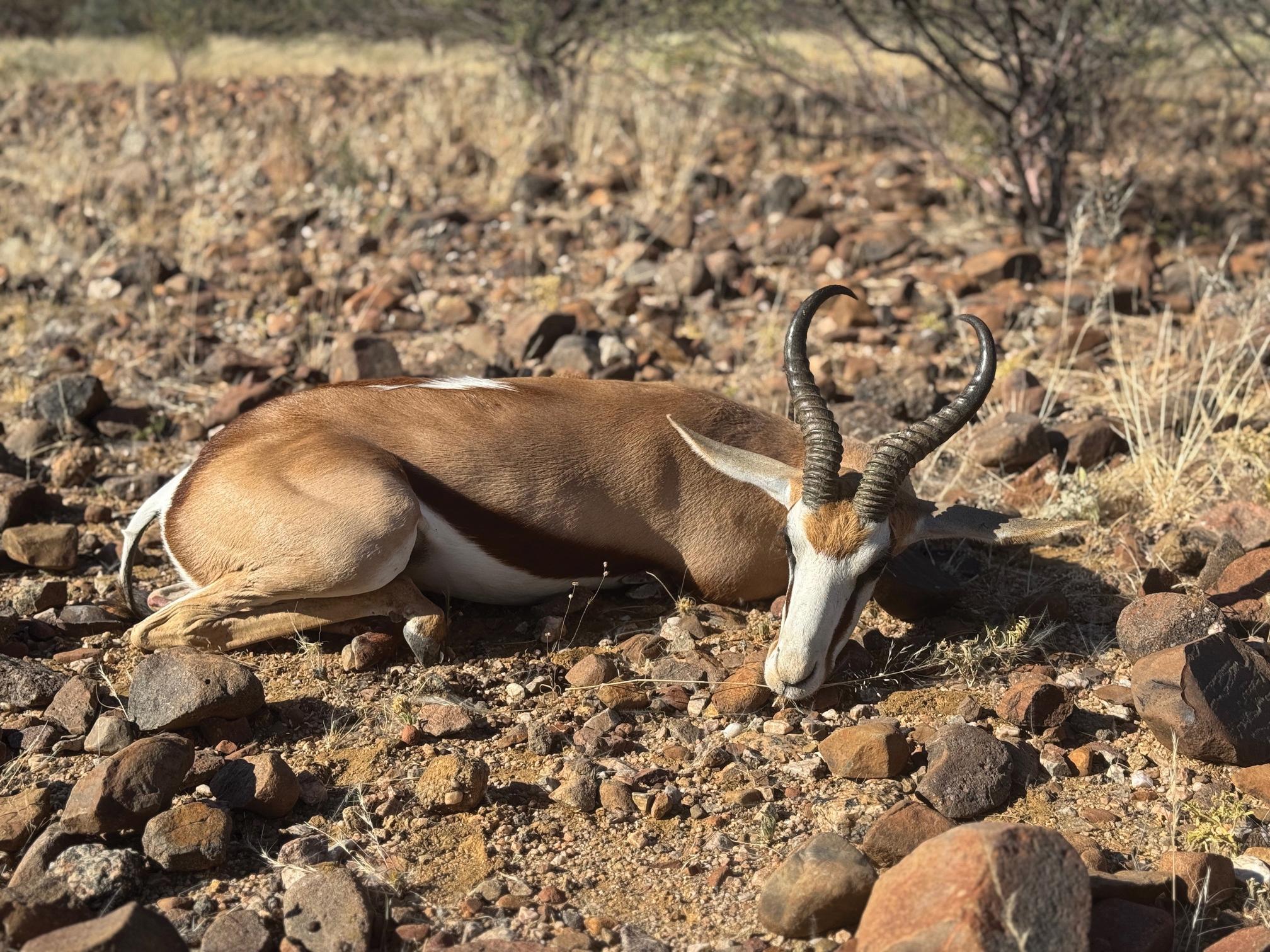
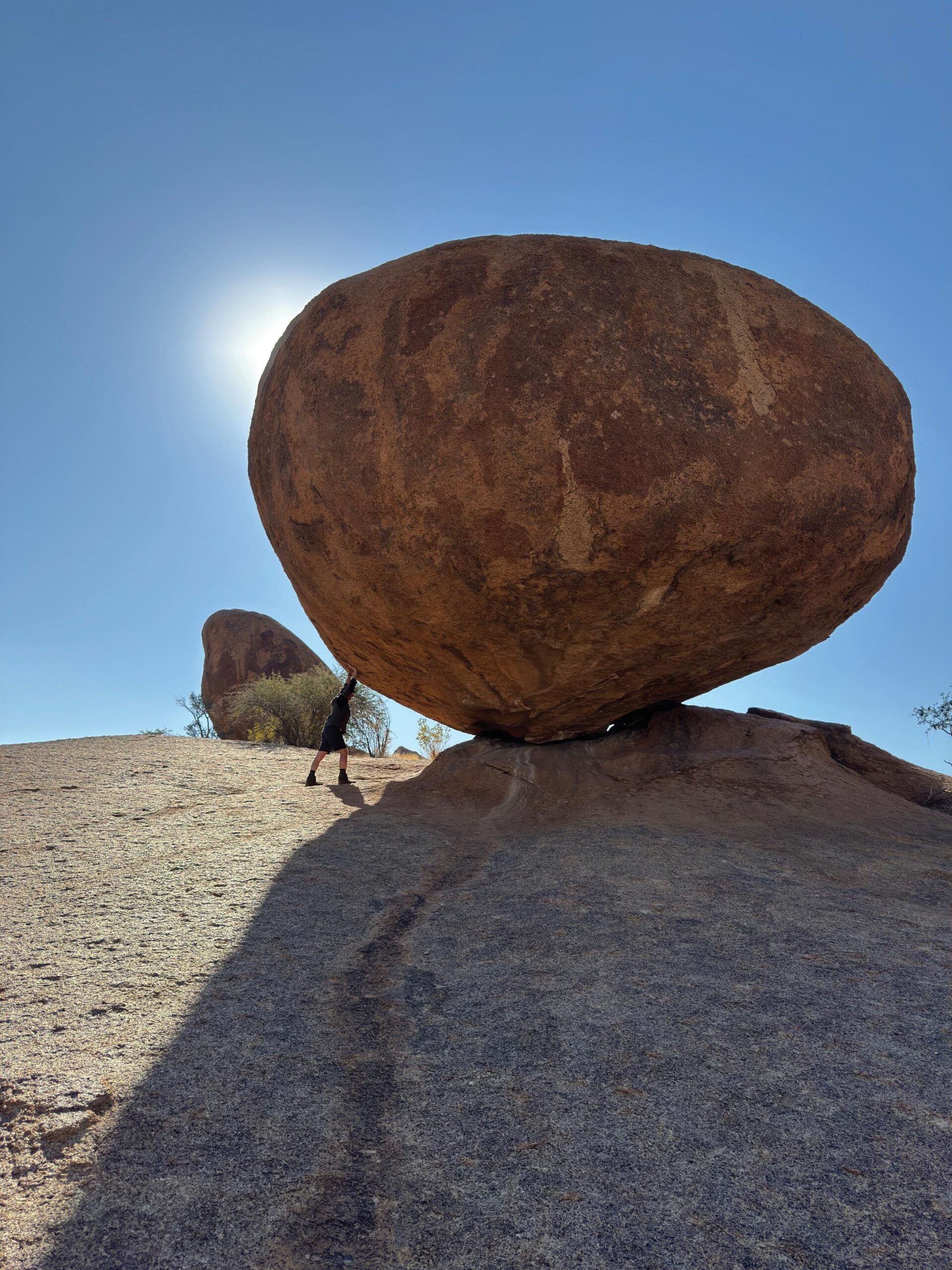
At sunrise we were on our way in the Land Rover, rumbling to a dry riverbed. There we test-fired our .300 Winchester Magnum Mauser rifles at a distance of 100 metres. Afterwards we roamed through a seemingly endless plain of bristlegrass, framed by rugged red mountains and surreal rock formations. In this breathtaking and untouched habitat we spotted plenty of game. Gemsbok (Oryx), zebra, giraffe and springbok crossed our path. On the second day of stalking we found fresh hyena tracks. Hyenas are plentiful in this hunting area, and so are leopards. Our stalk was noisily accompanied by Grey Loeries, or Go-away-birds. It didn’t bother us at all that we didn’t bring our rifles to bear during those first few days. Back at camp, a small but recurring ritual developed – we gathered around the campfire every evening and with a Tafel Lager in hand debriefed (we are both of military background) the day’s events. Soon we coined the term: Tafel debrief of Ameib.
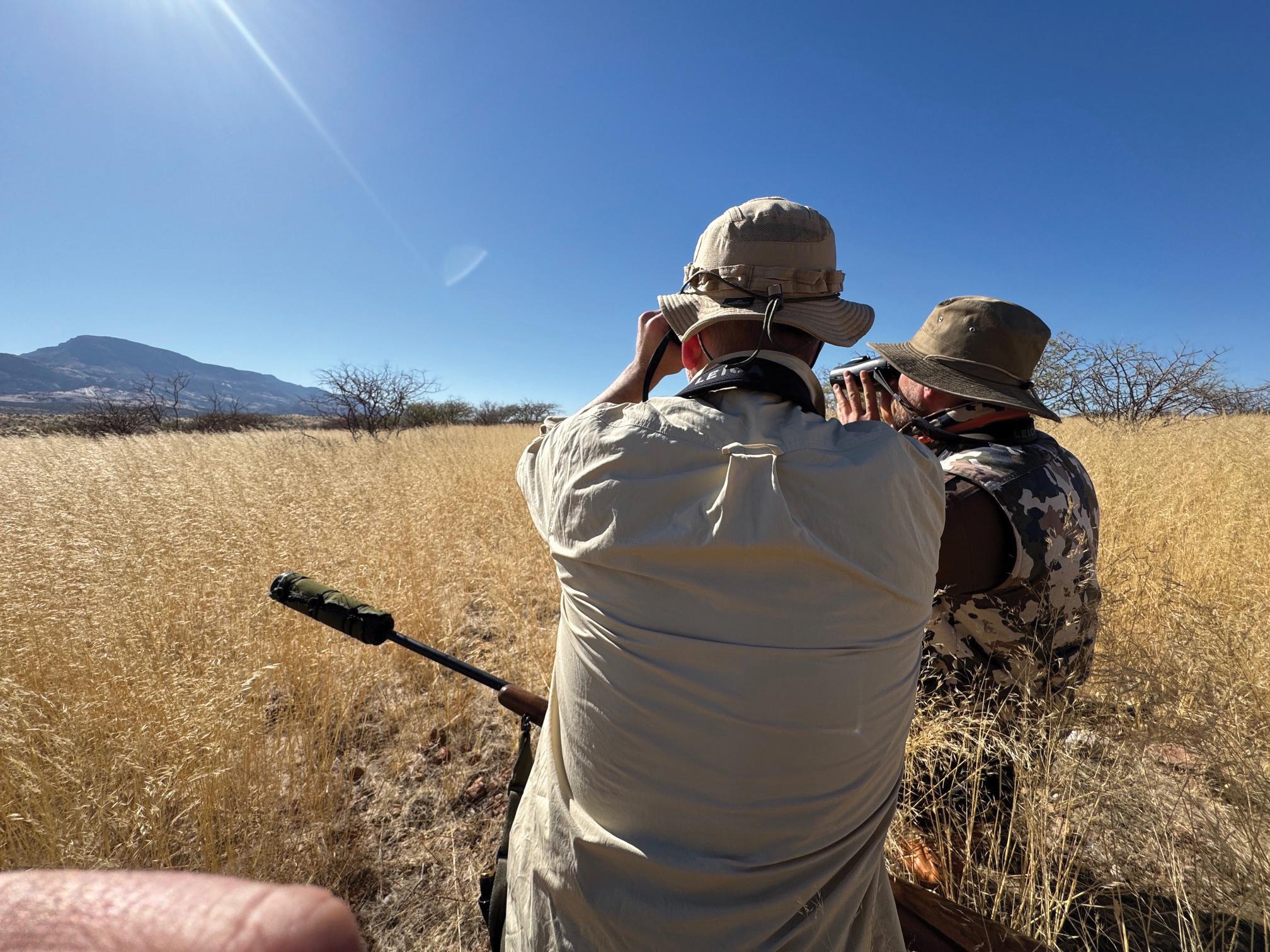
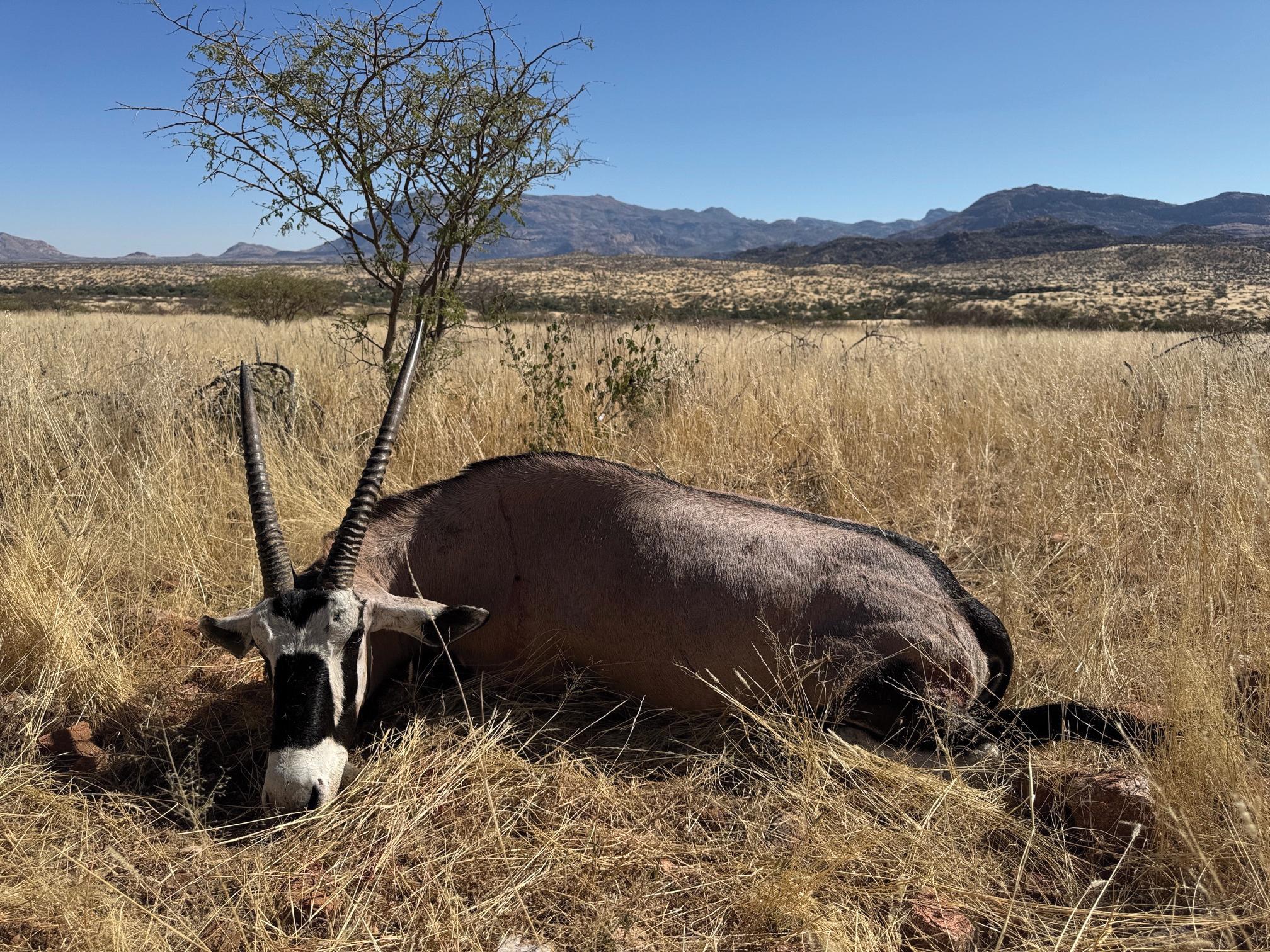
After a brisk walk on the third day of the hunt we climbed up onto a mountain ridge and glassed the wide savannah landscape stretching out some two kilometres below us in the valley between the ridge and the mountains beyond. After glassing for quite some time, Hagen identified an old gemsbok bull with worn horns. The bull had clearly passed his prime, and our excitement rose immediately. At first, the bull moved a little further, but then he bedded down in the sparse shade of a thornbush.
Our strategy was to briskly move upwind, across several smaller ridges and through a dry riverbed, to close the distance to the bull to shooting range. Unnoticed, we got to within about 300 metres of the old warrior. Then, down on our knees, we continued to about 120 metres – and when Hagen gave the all-clear, Holger let fly. The bull dropped instantly but still kicked his hind legs. Hagen explained that it can actually be a warning sign when a gemsbok – in principle a very tough animal – collapses instantly. So we remained at the ready for ten minutes. Then, as we wanted to move closer, the bull indeed jumped up again and veered off to our left. It took a couple of shots to bring him down for good.