Teamwork provides the meat

by Piet van Rooyen

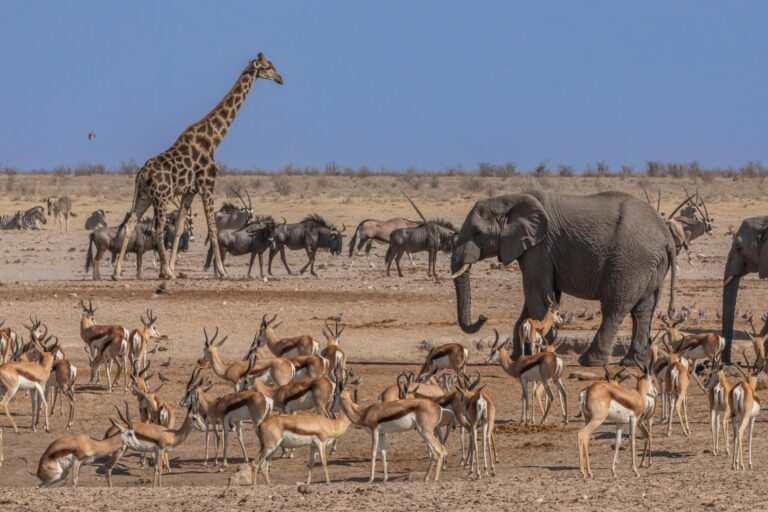
Stories are manifold of the great springbok migrations in the South African Free State and up the Karoo towards the end of the 19th century, a migration (or trek) that involved many thousands of springbok and formed herds of several kilometres wide. Farmers and hunters of those times told of spurring on their horses in order to get out of the way of the masses of these “trek-bokke”. In Lawrence Green’s book Karoo an incident is related of how a Karoo farmer, Gert van der Merwe, moved his sheep and cattle between grazing lands, assisted by his shepherds and a Khoi wagon leader. “The trek-buck are on their way, and we’ll be trampled to death if we stay in the riverbed”, the driver warned when only a cloud of dust was visible in the distance.

They immediately started erecting thorn fences around the wagon and the oxen. Gert claims that the dust cloud was so thick it became hard to breathe. His wife covered their children with blankets in a desperate attempt to prevent them from being smothered. It took around an hour for the bulk of the herd to pass. Stragglers and wounded animals tried to catch up for some time afterwards. Gullies in the veld filled with the carcasses of dead springbok.

In the 1800s explorers recorded springbok herds numbering in the millions. In 1888 a herd of springbok, estimated to comprise ten million animals, was recorded near Nelspoort in the Cape. In 1896 another herd, recorded at Karee Kloof on the Orange River, was estimated to be 24 km wide and more than 160 km long. When the Schanderl brothers arrived by train in Klein Karas near the Fish River Canyon in the late 1800s, they continued by horse cart. In their journals they noted that they passed through a herd of springbok that was 20 000 strong.

Green spoke to someone who told him how he watched thousands of springbok trekking through the town of Kenhardt in the Northern Cape. Everyone in that place seemed to be shooting from his front veranda. It was probably the most devastating migration in living memory. Police sounded the alarm and distributed ammunition to farmers at half-price. The damage was tremendous, but it could have been worse had the invasion not ceased all of a sudden. The springbok horde turned and raced back to the Kalahari. It was said that rain had fallen behind them, and the north wind had brought them, over hundreds of miles, the irresistible smell of damp earth and young grass.

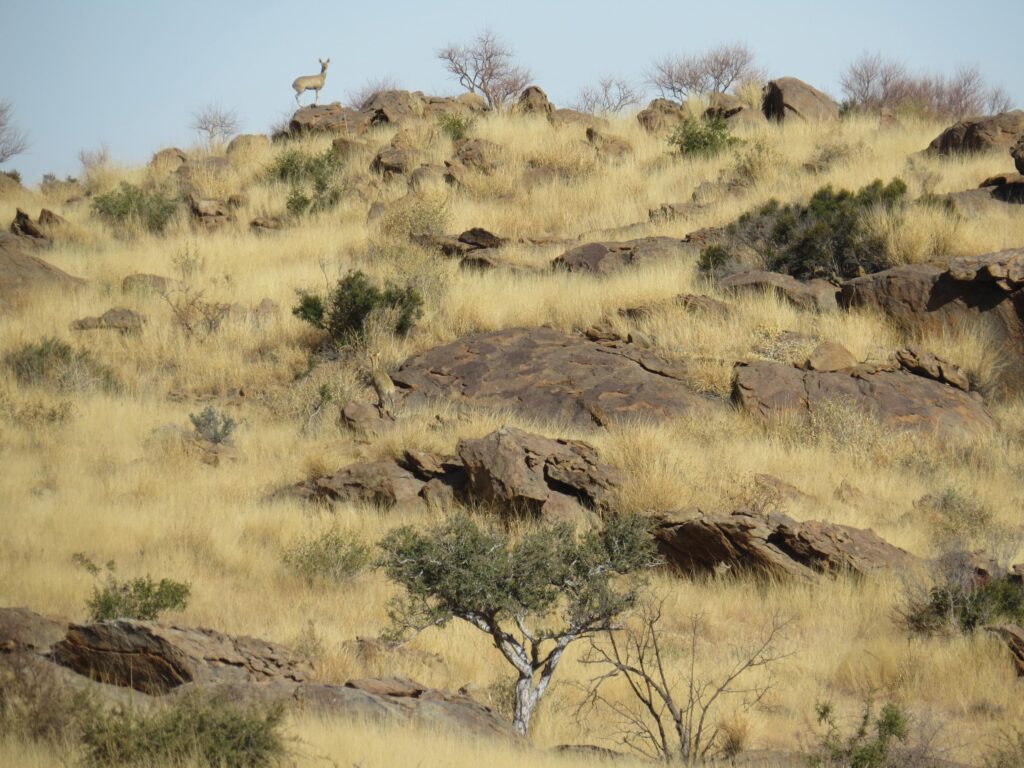
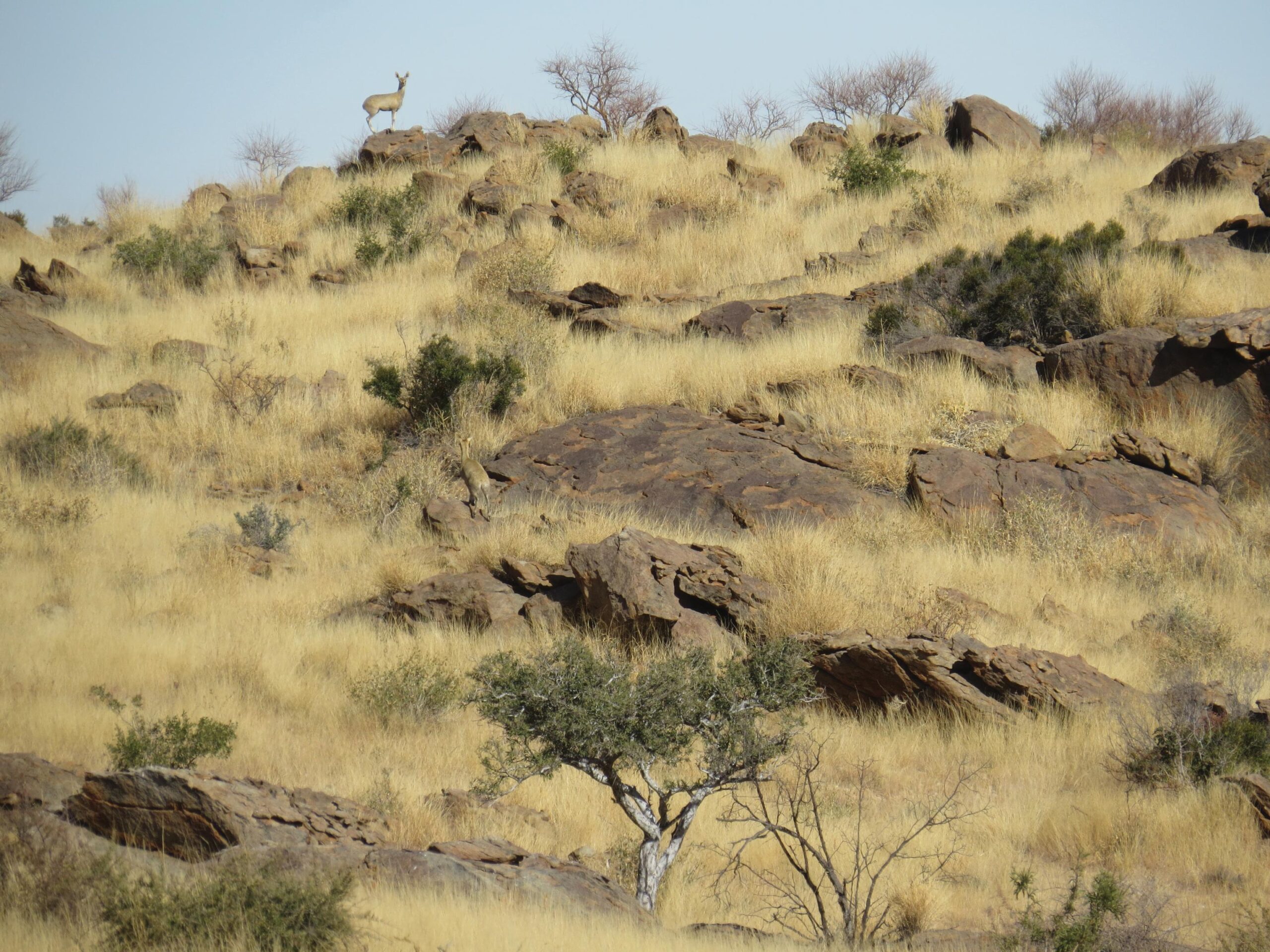
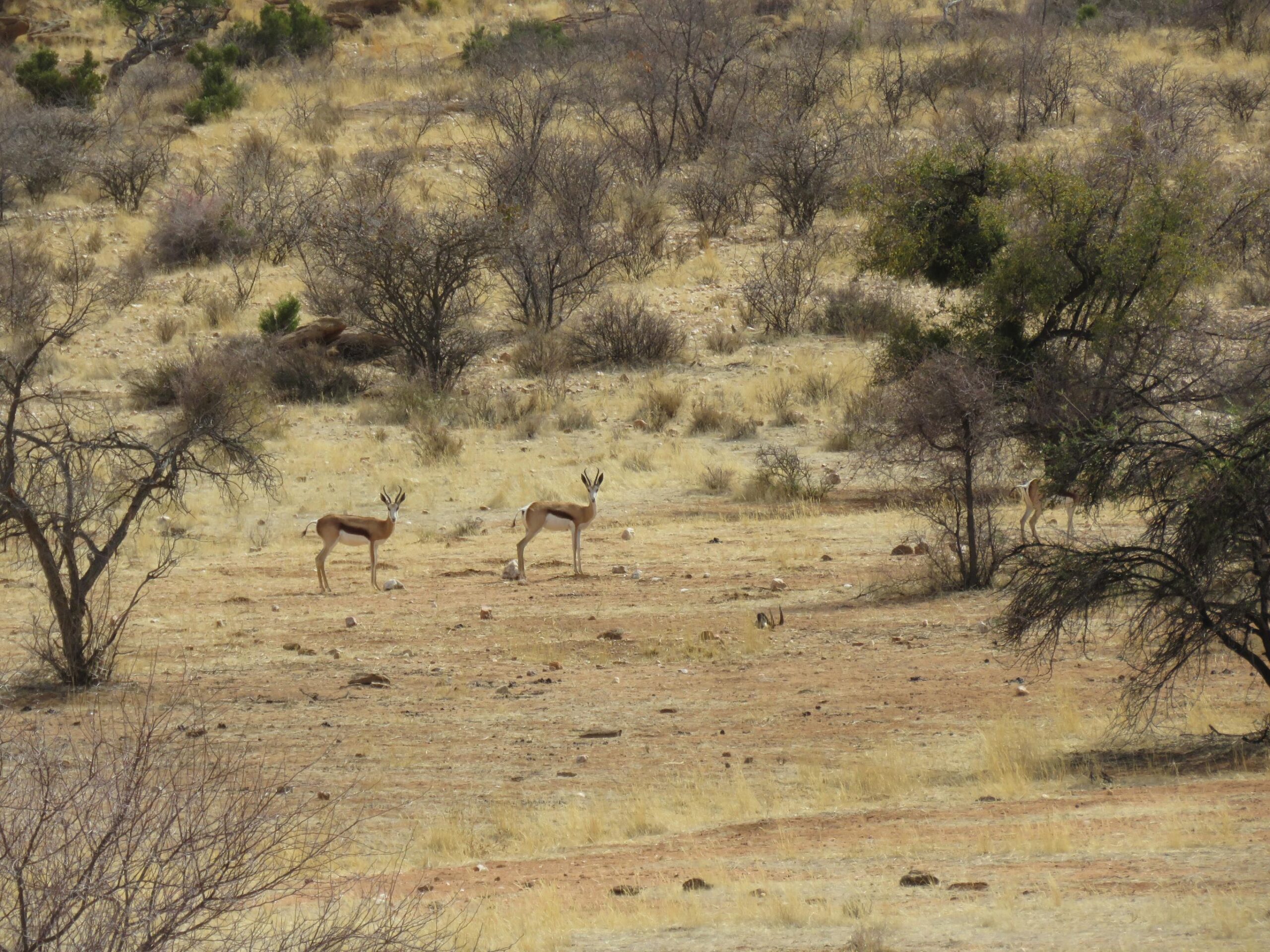
Nobody knows for sure why this huge annual migration of springbok stopped altogether. Excessive hunting probably played a role, as well as fencing off formerly open grasslands, thereby blocking traditional migration routes. Probably the ready availability of borehole water on modern-day farms and the rotational management of grazing camps also contributed to the springbok staying put. One common denominator of springbok congregations is the presence of flat open terrain, their preferred habitat wherever they occur. My farm at the Gamsberg in Namibia’s Khomas Hochland is not an ideal springbok habitat. It is much too rocky and hilly, but substantial herds of springbok are found on neighbouring farms with flatter terrain. Now and then a single male, or a group of young males, would enter my land by slipping through under the fences and stay around for a day or two before moving on to better-suited terrain. I never tried to hunt one of those, as they never stayed for more than a day or two, even though I could not ignore the yearning for a nice piece of fresh springbok loin.

“Nobody knows for sure why this huge annual migration of springbok stopped altogether. Excessive hunting probably played a role, as well as fencing off formerly open grasslands, thereby blocking traditional migration routes.”

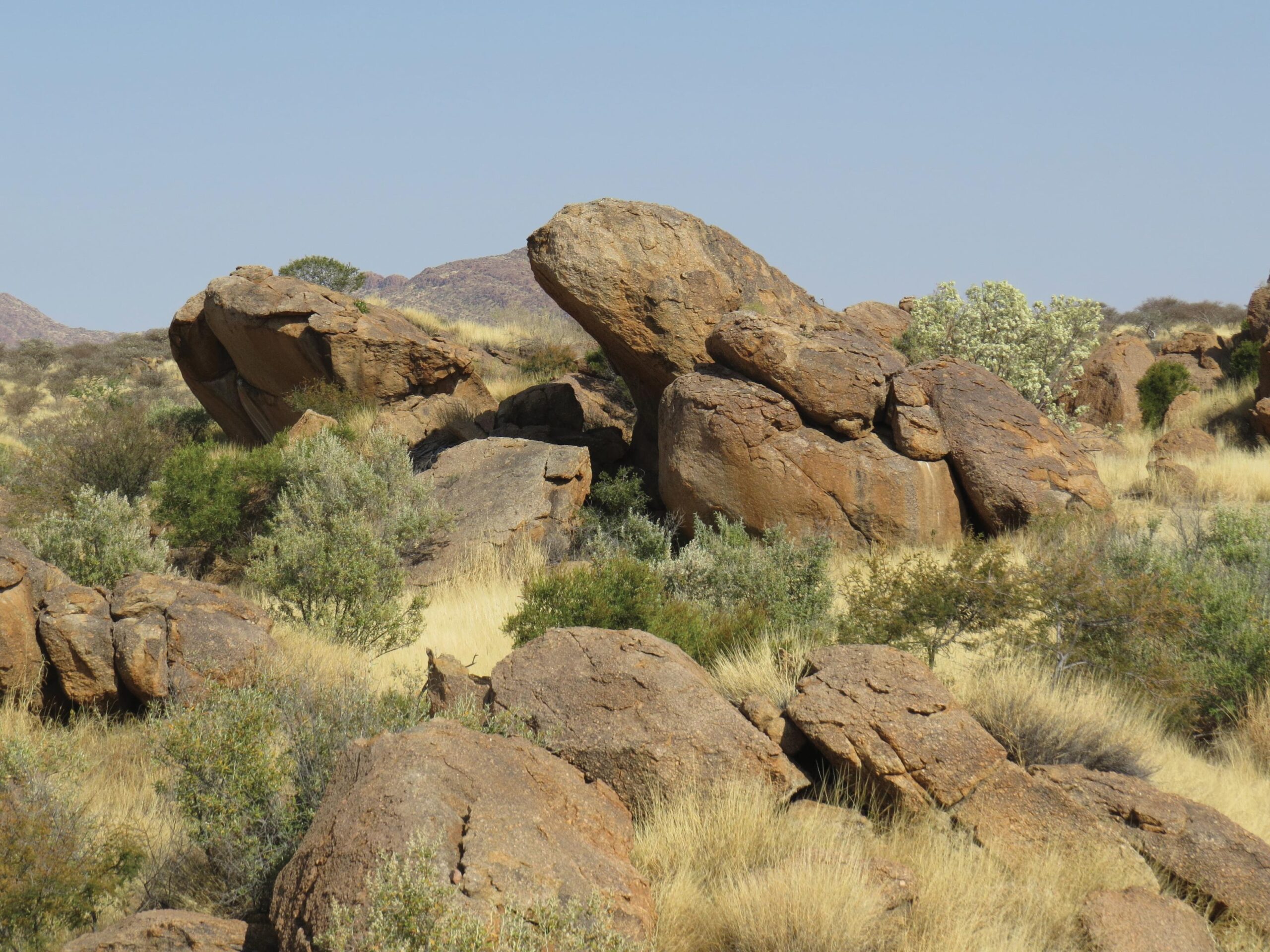
In August this year a single ram arrived from somewhere unannounced, and slipped through under the fence at my northern boundary. He soon adapted to his new home and started mingling with the herd of cattle in that camp. I decided to try and hunt him, but that was easier said than done. He had probably come from afar and had not survived the trek out of stupidity. Every time I drove my old Jeep up the hill to look for him the ram saw me way before I could get into stalking mode. I tried to circle from various angles in his direction, but one of the cattle always saw me before I could get into range and alerted the ram. He had a few escape routes that he could follow, as the camp where he stayed was interspaced with granite outcrops, two dry riverbeds and several intersecting gullies. I very soon got lost in the maze of obstructions in the terrain, and could never get any nearer to the ram than the several hundred metres from where I saw him from the top of the boundary hill.

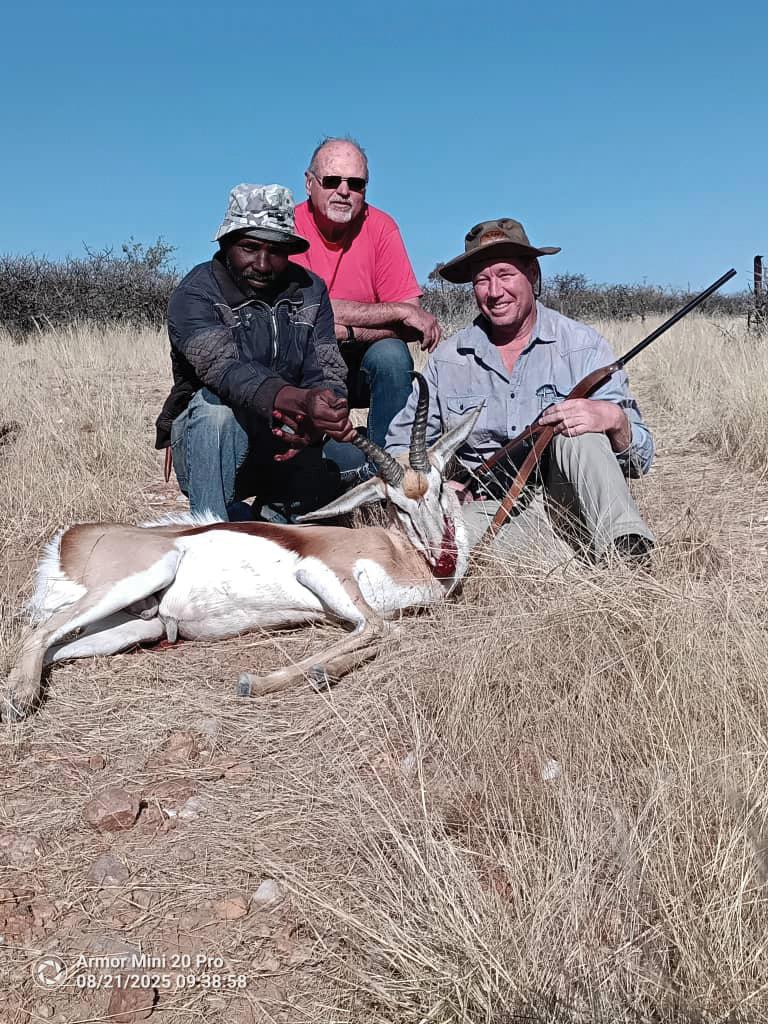
Until one day, when a good friend of mine, Hilmar von Lieres, came to visit. He brought his 8 mm. Mauser with him – not the ideal calibre for long-range springbok hunting, but we decided to give it a try. I realised that we would have to devise a strategic plan and put our faith in coordinated teamwork. Fortunately, we had good cell phone reception all over the farm and could stay in touch throughout the exercise. We dropped Hilmar off in the cover of some granite koppies, and me and my trusted farm worker Mannetjie /Uirab drove up the hill to the spot from where we regularly saw the ram. He was there, as usual, way down in the veld, grazing among the cattle.

Now an intricate game of cat and mouse began. The ram must have detected Hilmar’s approach, because he started wandering off in the direction of his habitual escape route. Now we could clearly recognise his movements. The ram did not move in a straight line but followed a zig-zag pattern, definitely fully focused on his best options of getting away. I realised that his clever and irregular movements were the reason why I always lost track of him when trying to follow him on my own. Mannetjie had the binoculars and kept him in view all the time. I could keep contact with Hilmar to tell him where and how to adjust his approach. We could see how he slowly got closer to his prey. For a moment I thought he was within range and could take a shot, but he reported that from where he stood he could not see the ram at all.

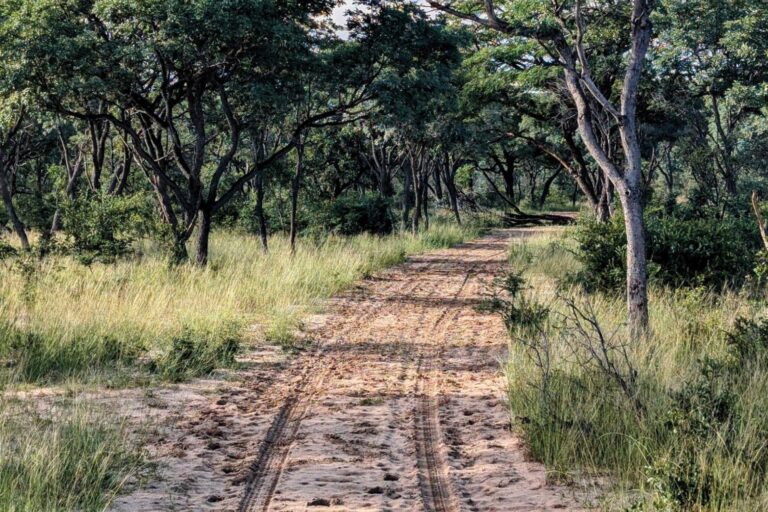
At one point the springbok completely disappeared from our sight, and made off over a high ridge in a westerly direction. I knew that the area where he moved to was thickly overgrown with blackthorn, and that he would probably try to hide in that thicket. We called Hilmar back to the vehicle and slowly drove up the boundary hill. Just before passing the top we stopped and cautiously approached the thickly-wooded valley on the other side.

Mannetjie still had the binoculars glued to his eyes, and was fortunate to spy the springbok where he was hiding in the thick bush. He had to describe the position very precisely before any of us could see the splash of white hiding in the undergrowth. It was now or never. Hilmar depended on the penetrating power of his 8 mm. and took the shot. However, some branches must have deflected the bullet, and the shot went astray.

But now the ram slipped out of the thicket and started trotting down the two-track road, away from us. Hilmar’s second shot was true, hitting him diagonally from directly behind the right front leg. The heavy bullet dropped the ram in his tracks. Afterwards I realised that in the case of this clever adversary, however long I tried, and whatever different plans I tried to make, I would never have managed to successfully hunt him on my own.

We divided the meat between the three of us. The ram dressed out a full 30 kilograms of meat. He was one of the heaviest bucks I have ever encountered. That’s how teamwork provides the meat.

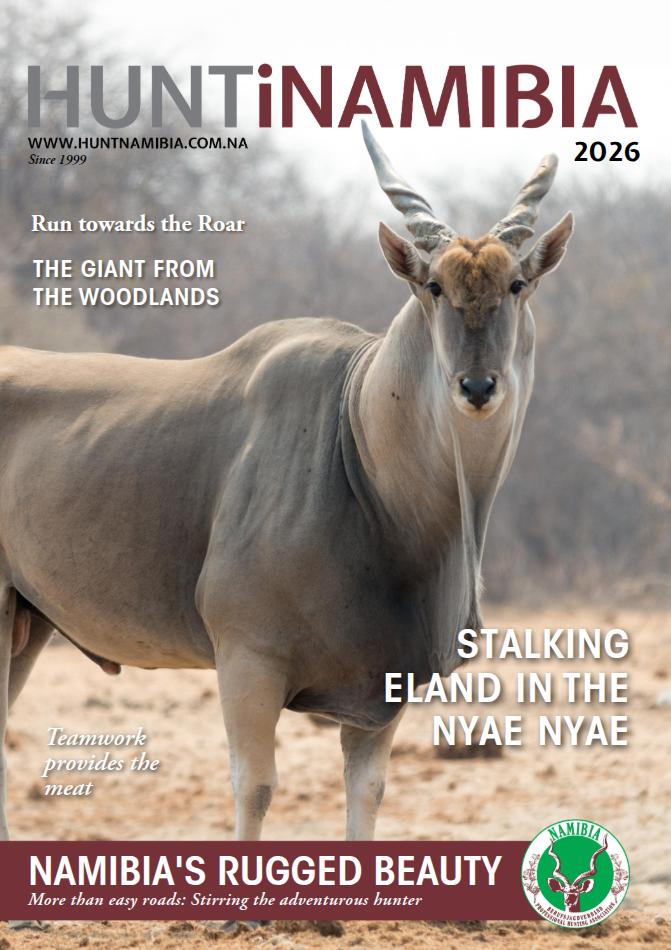
From the 2026 issue of Huntinamibia

Our Partners

Related posts

Namibia’s rugged beauty

Sometimes you hear someone speak and their words settle deep inside you, reshaping the way you see the familiar. That happened to me when I listened to Kai-Uwe Denker’s reflections on hunting in Namibia at the previous NAPHA AGM. His words were not polished marketing talk, nor defensive arguments about

Read More »

Namibia should be Africa’s first Lead-free ammunition country

White-backed Vulture J151 should be an ambassador for Namibia to become the first African country to ban lead ammunition for the benefit of nature and humans. All vulture species known in Namibia are either extinct as breeding species (Egyptian Vulture), critically endangered (Cape Vulture), endangered (Hooded Vulture, White-backed Vulture) or

Read More »

Teamwork provides the meat

Stories are manifold of the great springbok migrations in the South African Free State and up the Karoo towards the end of the 19th century, a migration (or trek) that involved many thousands of springbok and formed herds of several kilometres wide. Farmers and hunters of those times told of

Read More »

Read the full 2026 issue