Namibia should be Africa's first Lead-free ammunition country

Discover the values of vultures and the threat posed by lead

by Dirk Heinrich

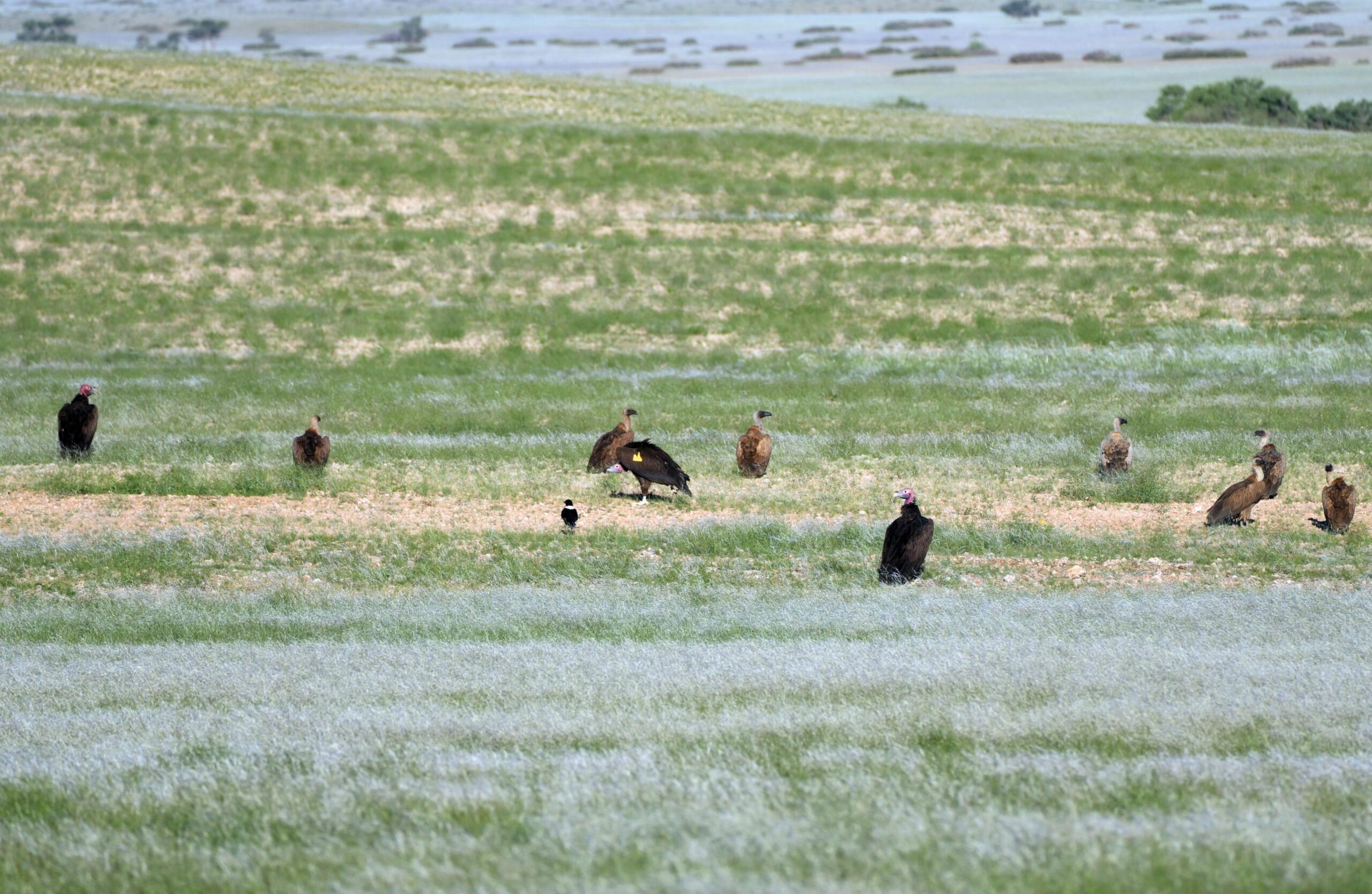
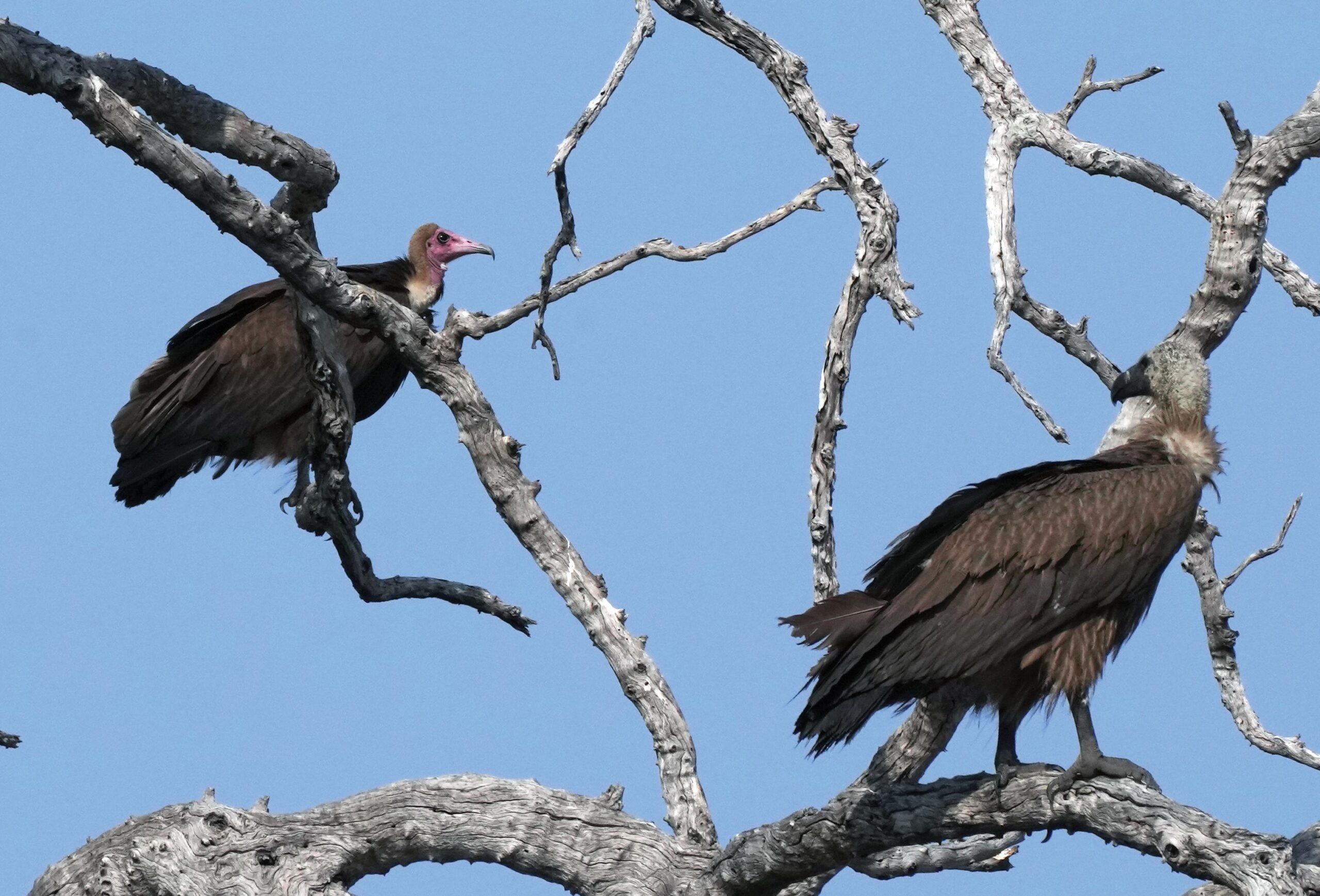
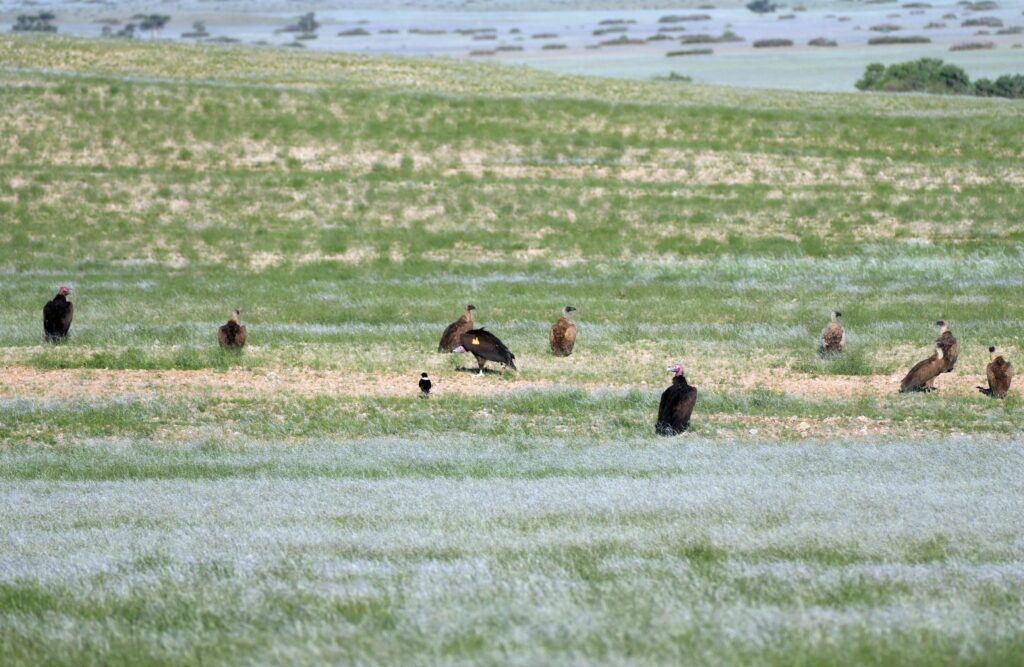
White-backed Vulture J151 should be an ambassador for Namibia to become the first African country to ban lead ammunition for the benefit of nature and humans. All vulture species known in Namibia are either extinct as breeding species (Egyptian Vulture), critically endangered (Cape Vulture), endangered (Hooded Vulture, White-backed Vulture) or vulnerable (Lappet-faced Vulture, Whiteheaded Vulture). Numerous factors have led to the decline of the vulture populations in Namibia, in the region and in Africa in general. Habitat loss, disturbance, poisons and illegal killing are the main reasons. Lead-poisoning through ammunition has only recently been discovered as another dangerous factor leading to the decrease of these valuable birds.

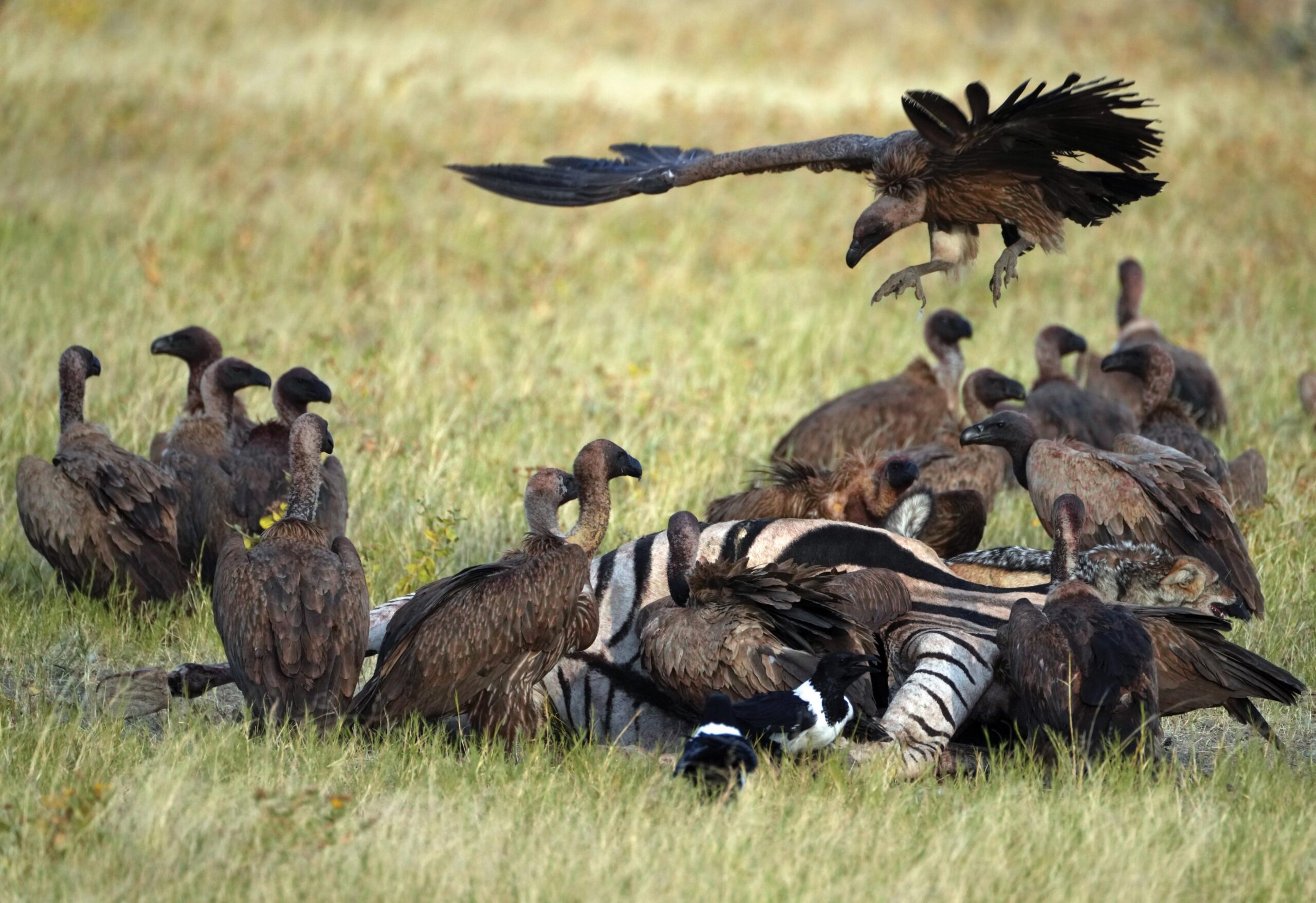
It is time that the general public discovers the value of vultures in our ecosystems and that farmers realise that vultures are their friends and not their enemies. Vultures are neither ugly nor dirty birds. Vultures are our health police, they clean up carcasses and by doing so prevent diseases from spreading. At the same time they alert farmers and conservationists to where dead animals are located. Farmers and conservationists are thus able to inspect the site and determine whether the animal in question has died a natural death or was killed by predators or poachers. Vultures pointing out the dirty and illegal practices of poachers, has in turn led to some disastrous poisoning cases in Namibia and in neighbouring countries, where poachers poisoned the carcasses of illegally killed elephants, buffalo etc. to avoid vultures giving away the location of the carcasses. Hundreds of vultures have been killed by poachers in this way. Apart from that, there are still farmers in Namibia who believe that vultures kill their new-born lambs and therefore shoot or poison the protected birds.

Cattle and game farmer Jürgen Bergmann, farming on Springbokvley east of Windhoek, reported on 14 April 2024 that at one of his water points he had found a White-backed Vulture that seemed to be very sick. Since poisoning was suspected, the farmer was asked to take the vulture home and try to give it charcoal. Charcoal is used as an emergency treatment of certain kinds of poisoning. It helps to prevent the poison from being absorbed from the stomach into the body. When Bergmann returned to the spot where he had left the bird, he found it “dead”. He called again and was advised to put the bird in a coldroom, and then bring it to Windhoek as soon as possible to have tissue samples taken and analysed to find out what type of poison could have been ingested by the bird.

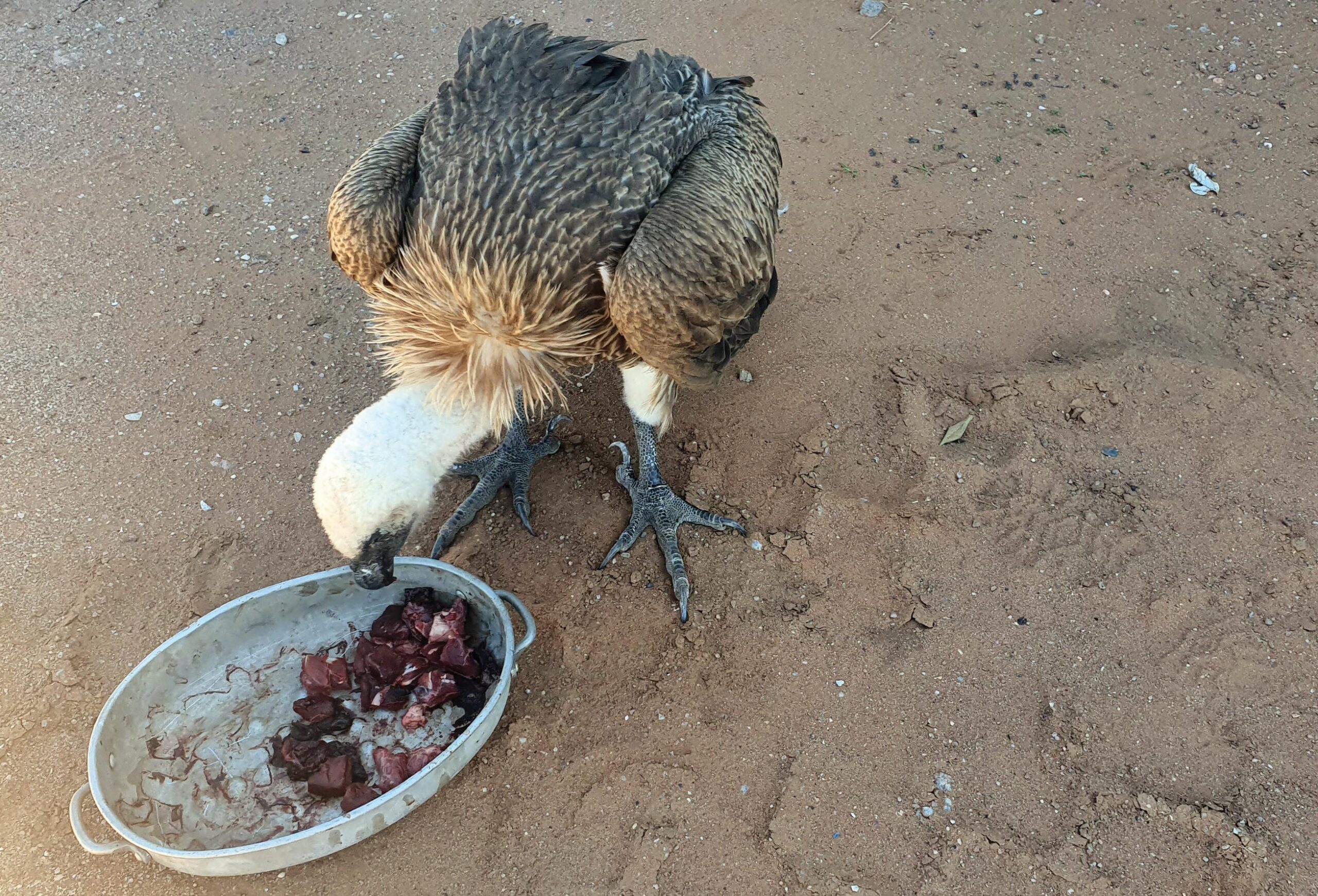
The next day Bergmann´s wife was furious when she found a live vulture looking at her in the coldroom. They took the bird outside into the sun to warm it up, and managed to give it crushed activated charcoal pills mixed with water. The vulture drank of the water. Two days later it ate some of the meat offered to it and it did not seem to be timid. The farmer was advised to stop giving charcoal and keep on feeding the bird. A few days later the vulture flew onto the roof of one of the buildings and came down to feed when offered meat.

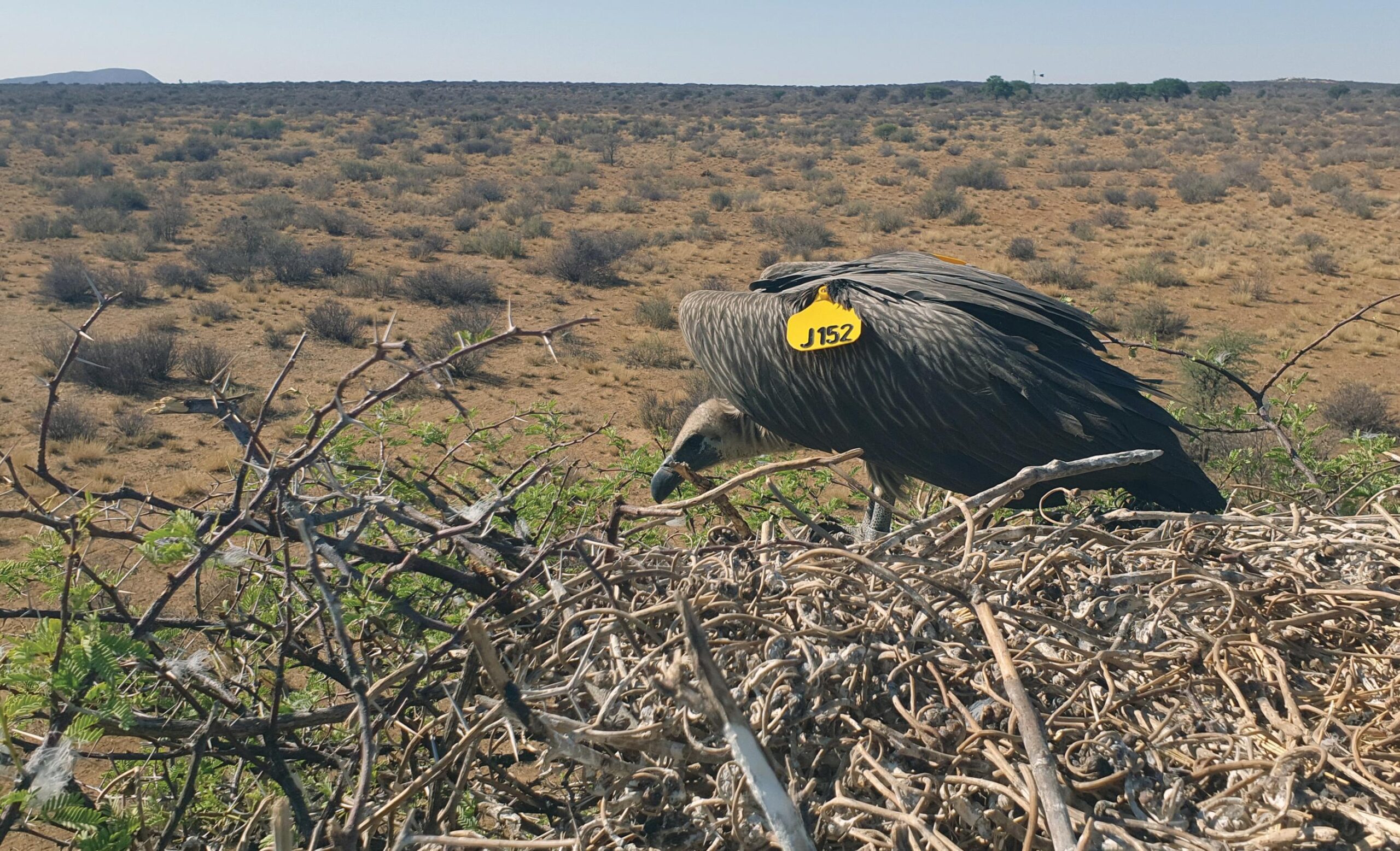
On 21 April the young White-backed Vulture was ringed (RA00461) and tagged (J151). The following week it was gone for a day but came back for more meat. The last time the Bergmanns saw J151 was on 27 and 28 April. The next day they left for the coast because it was school holidays.

On 30 April the owner of farm Aanhou-Wen, 120 km north of Upington in the Northern Cape in South Africa and 680 km south from Springbokvley, was told by his staff that a vulture was perching in a camel thorn tree near the house and seemed unbothered by humans. The next day the tagged vulture landed on the ground and followed one of the employees – who was afraid of the big bird. Later a ground squirrel was shot and given to the vulture who enjoyed the free meal. They continued feeding the bird with ground squirrels and warthog meat and reported its tags J151 on the wings and metal ring RA00461 on his left leg to a South African Organisation which is concerned about vultures. On one occasion the vulture even landed on the rail of the farmer’s hunting vehicle when they returned from a hunt.

The organisation working with vultures promised to fetch the bird. However, it flew off on 6 May.

While the organisation was still busy arranging for somebody to pick up the Whitebacked Vulture at the farm north of Upington, J151 was long gone. From Aanhou-Wen he flew 719 km south and landed between wind turbines at Nojoli Wind Farm, about 73 km south of Cradock in the Eastern Cape of South Africa.

According to a spokesperson of the organisation, the bird was brought in with head twitches and it had curly feathers which are symptoms indicative of lead toxicity and excessive stress as a nestling. The vulture was “treated with Baytril for respiratory infection and EDTA which is the antidote to lead poisoning”. On 22 May J151 was taken to the main rehabilitation centre near Johannesburg. Once he is rehabilitated and ready to be released, he will be fitted with a transmitter in the hope that his movements can be followed for a few years. It will be interesting to see if J151 will come back to Namibia.

Unfortunately the organisation never informed the Namibian ringer nor Vultures Namibia, that J151 was fitted with a transmitter, that the wing tags J151 were removed, that a blue colour ring was added and that the vulture was released in March this year (2025). This was only established in September after several attempts in the month before to gain information. “The bird was tracked for a month until the tracker stopped. Went into Botswana and was headed along the border towards Namibia but the device just stopped”. It is not known where exactly the White-backed Vulture was released or what his last waypoint is. Nor is it known where the bird is now and whether it is even still alive.

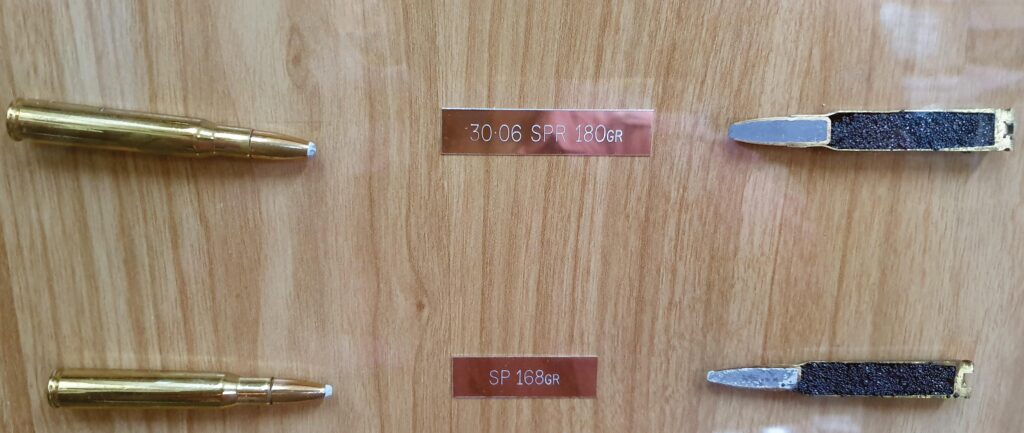
This photograph shows how much lead is in a bullet. Only the outer layer is copper.

Another unanswered question is where the parents of J151 picked up the leadcontaminated meat and what the lead level of poisoning in the body of the young Whitebacked Vulture was/is. But White-backed Vulture J151 shows what we humans are doing to our environment and its creatures by using lead. Some trophy hunters visiting our country have proven that it is possible to hunt without leadammunition successfully.

Lead poisoning has become an increasing problem, especially in vulture chicks. On 24 April Dr Linda van den Heever, Species Conservation Programme Manager of BirdLife South Africa, gave a talk on “Lead Poisoning in southern Africa’s Cape and White-backed Vultures” at the Namibia Scientific Society.

According to the expert, the main cause of lead poisoning in vulture chicks is lead ammunition. The Namibian Professional Hunting Association (NAPHA) had the topic of lead poisoning through lead ammunition explained by experts at their AGM in December 2021.

According to some Namibian hunting guides and professional hunters a number of trophy hunters coming to Namibia bring along their own lead-free ammunition. Experts interviewed said that there is little difference in lead-based and lead-free ammunition from a ballistic point of view. There is no reason not to change to lead-free ammunition for hunting.

No research has been done on farmers and their staff who consume a lot of game meat, to find out what level of lead is in their body. It is no secret that it is difficult to measure the level of lead in a human or animal. A human body, like that of any animal, is not capable of excreting lead. The poisonous metal is forever embedded in tissue and as the level rises, it becomes an ever increasingly serious danger. There is no safe level of lead in humans and wildlife.

A study on the dangers of lead poisoning through lead ammunition in vulture chicks has resulted in Vultures Namibia stopping farmers from putting out meat of hunted animals at vulture restaurants. The latter were promoted for many years as a means of boosting dwindling vulture populations. It is possible that a lot of the meat and intestines given to vultures are contaminated with lead particles of even microscopic size. Levels of lead then build up in vultures which repeatedly feed on contaminated meat and offal, posing a danger to their health and ultimately their survival.

No official research has been initiated in Namibia to find out more about the problem of lead contamination caused by lead ammunition in game meat, and secondarily of animals and humans who eat game meat and offal. The reason is a lack of funds, experts and specialised laboratories.

We need to find out more about the movement of our vultures and their behaviour, and we need to find ways to save these magnificent birds. Hunters are one important factor in the survival of these extraordinary creatures.

From the 2026 issue of Huntinamibia

Our Partners

Related posts

Champion of Sustainable Conservation

In a world where the balance between wildlife conservation and human progress grows ever more delicate, it takes exceptional conviction to defend nature’s most pragmatic truths. Few embody this balance more steadfastly than Dr Clemens von Doderer, the 2024 recipient of the Namibian Professional Hunting Association’s Conservationist of the Year

Read More »

Namibia’s rugged beauty

Sometimes you hear someone speak and their words settle deep inside you, reshaping the way you see the familiar. That happened to me when I listened to Kai-Uwe Denker’s reflections on hunting in Namibia at the previous NAPHA AGM. His words were not polished marketing talk, nor defensive arguments about

Read More »

Namibia should be Africa’s first Lead-free ammunition country

White-backed Vulture J151 should be an ambassador for Namibia to become the first African country to ban lead ammunition for the benefit of nature and humans. All vulture species known in Namibia are either extinct as breeding species (Egyptian Vulture), critically endangered (Cape Vulture), endangered (Hooded Vulture, White-backed Vulture) or

Read More »

Read the full 2026 issue