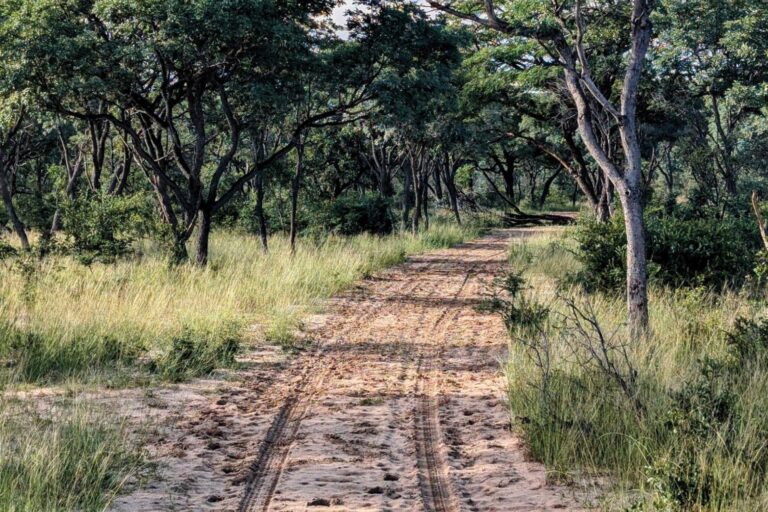
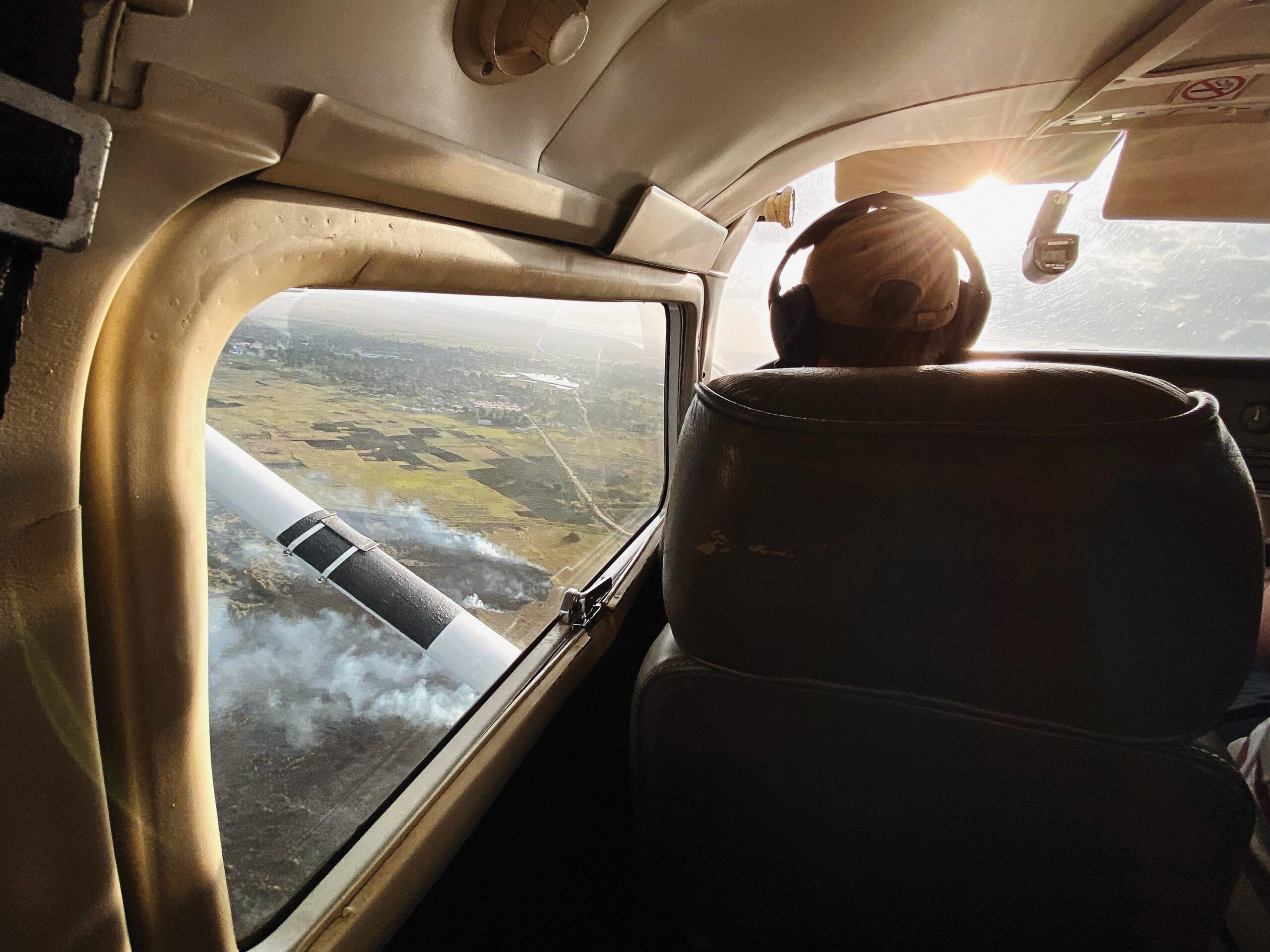
With a light drizzle of rain still falling, we loaded up the Cruiser and set off to find fresh tracks. Standing on the back of the Toyota as we weaved our way through a wetted landscape, I told our head tracker, Joào, that I had a feeling today was going to be a “buffalo day”. He gave me a cheeky grin while gesturing to an imaginary watch on his wrist and saying, “8 o’clock” repeatedly. True to his word, it was 07:55 when we cut the first spoor and Joào jumped off the vehicle to investigate. The track was from a lone dagga boy – exactly what I wanted – but signs of rain on top of the tracks were a clear indicator that it wasn’t fresh enough to follow.
We continued onward to find another lone dagga boy track an hour later. Although slightly fresher and normally worth following, the bull’s tracks were headed in the direction of a massive thicket that our team was all too familiar with. A day earlier, we had spent several gruelling hours tracking a large herd into the same thick jungle. Twice, we had a hundred or more buffaloes a mere twenty yards away and never even saw a glimpse of them. Our only knowledge of their presence had been the telltale bovine stench, their intermittent bellowing, and finally the thunderous roar of a spooked herd crashing through the nearby brush. To find a lone bull in that same thicket would be nearly impossible. That said, we gave it a go and followed the track for nearly two hours only to confirm that this bull had indeed retreated into the hellish rat’s nest. With a familiar sting of disappointment, we turned around and headed back to the waiting Cruiser.
As midday approached, most tracks from the early hours of the morning were beginning to grow stale, so we decided to change tactics and drive a long, tedious loop to a large treeless area that we had dubbed “Buffalo Pan”. This open stretch of land had a few small pools of water and mud that buffalo frequented, along with some supple new-growth grass resulting from burns that our team had conducted earlier in the season. Despite these favourable conditions, finding buffalo in the open during the middle of the day is a rare occurrence, so we went in with relatively low expectations.
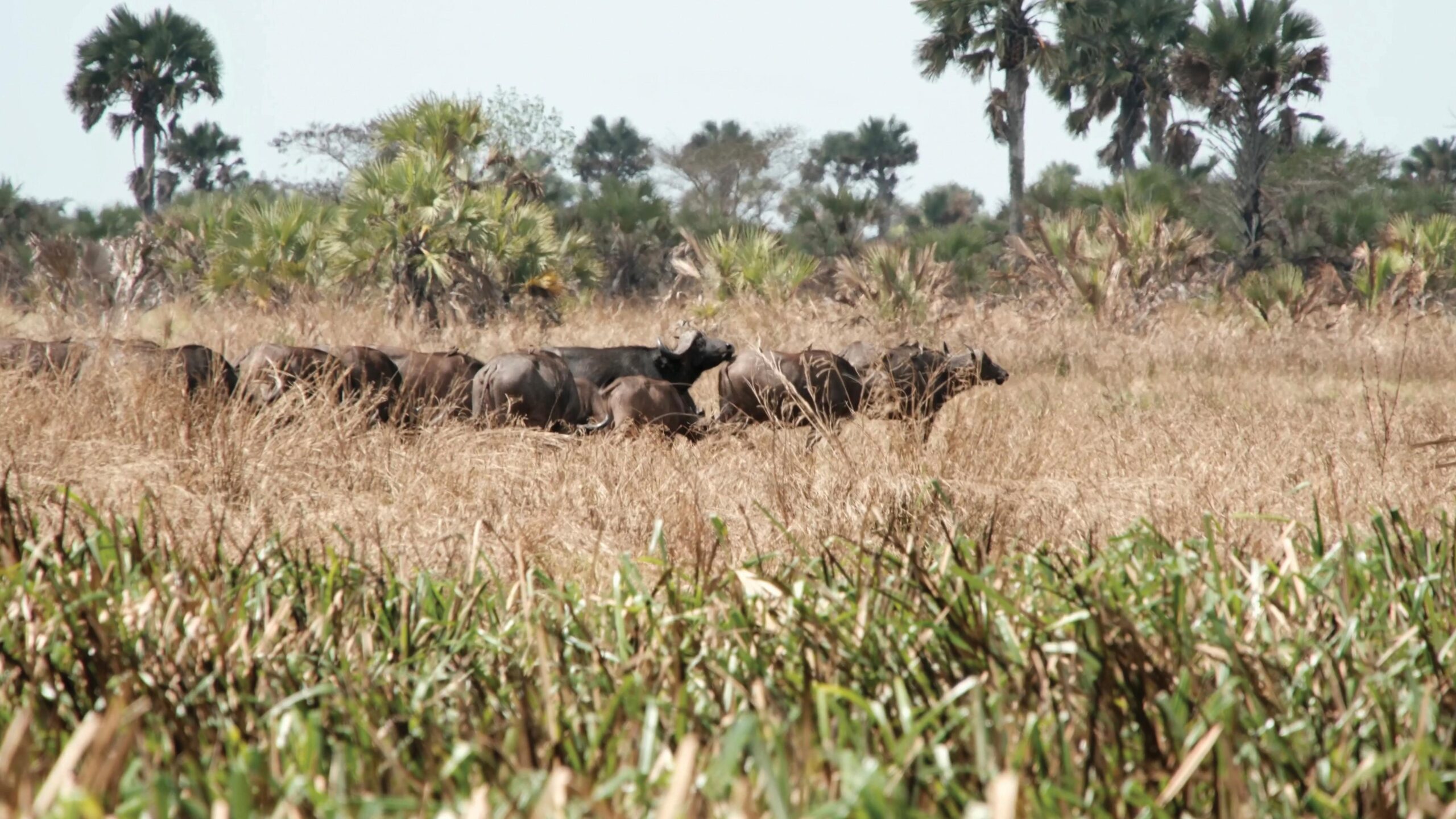
A first glance of the pan from a distance yielded a lifeless scene, but the northwestern corner was hidden by a small row of Lala and Borassus palms and required a closer look. We approached slowly, straining our eyes to see through the thick palm leaves and hoping to uncover what the other side might hold. Suddenly, the flash of a flitting oxpecker, followed by the swishing of dark tails, broke the visual silence. “Buffalo!” I croaked in a hushed tone.
Sure enough, a herd of fifty-some buffalo were grazing two hundred yards away. Although it was not the lone dagga boy or bachelor group that I had hoped for, we knew that the old bulls often filter in and out of the larger herds this time of year, so there was still a chance that one of the old boys could be mixed up between the cows and young bulls.
With a complete lack of cover, unfavourable wind, and the herd methodically moving away from us, a frantic stalk ensued. Ash and dust filled my lungs and coated my eyes as we leopard-crawled on hands and knees like madmen across the fire-scorched pan. The black earth burned my hands and radiated the already intense heat that was beating down on us from above. The floodgates of adrenaline began to unleash and course through my body. My stomach felt unsettled, and yet I remember thinking that this was one of the greatest stalks of my life.
A short wall of reeds in front of us was now the only thing that separated us from the buffalo. Every thirty yards or so, Kyne would stop to poke his head up and see where the herd was, then continue crawling at breakneck speed. When we finally reached the reeds, Kyne set up the shooting sticks and we slowly rose into position. Instead of a single bull standing perfectly in front of me as I had so often envisioned, I faced a chaotic sea of black bodies.
The large, undulating black blob of buffaloes looked like one monotonous shape, punctuated here or there by a bull’s head that would suddenly appear above the backs of the cows. Each time Kyne and I would call it out to one another only to be met with the disappointment of a soft-bossed bull. Minutes went by and nausea started to set in as my eyes strained through the scope, panning left and right, hoping to catch a glimpse of something shootable I had not yet seen. I lifted my head and began scanning the herd with my naked eye instead. In my mind, it was the final act before admitting defeat.
I slowly took inventory of every single bull I could see, panning from left to right. I had nearly reached the far end of the herd when the black sea of beasts parted to create a gap that serendipitously framed a single buffalo, lingering behind the chaos of the large herd. The ghostly figure stood silhouetted in a thick cloud of dust, its silvery face and polished horn bosses glinting in a midday mirage. I immediately knew I was looking at my bull. “There’s an ancient old dagga boy at the back of the herd! A definite shooter”, I said excitedly. By the time I described where the bull was, the sea of animals had swallowed him up again and he had vanished before Kyne could locate him. I kept my crosshairs locked onto the spot, desperately waiting for another gap to appear, with the memory of a white, balding face and what had looked to be a broken horn replaying in my mind.
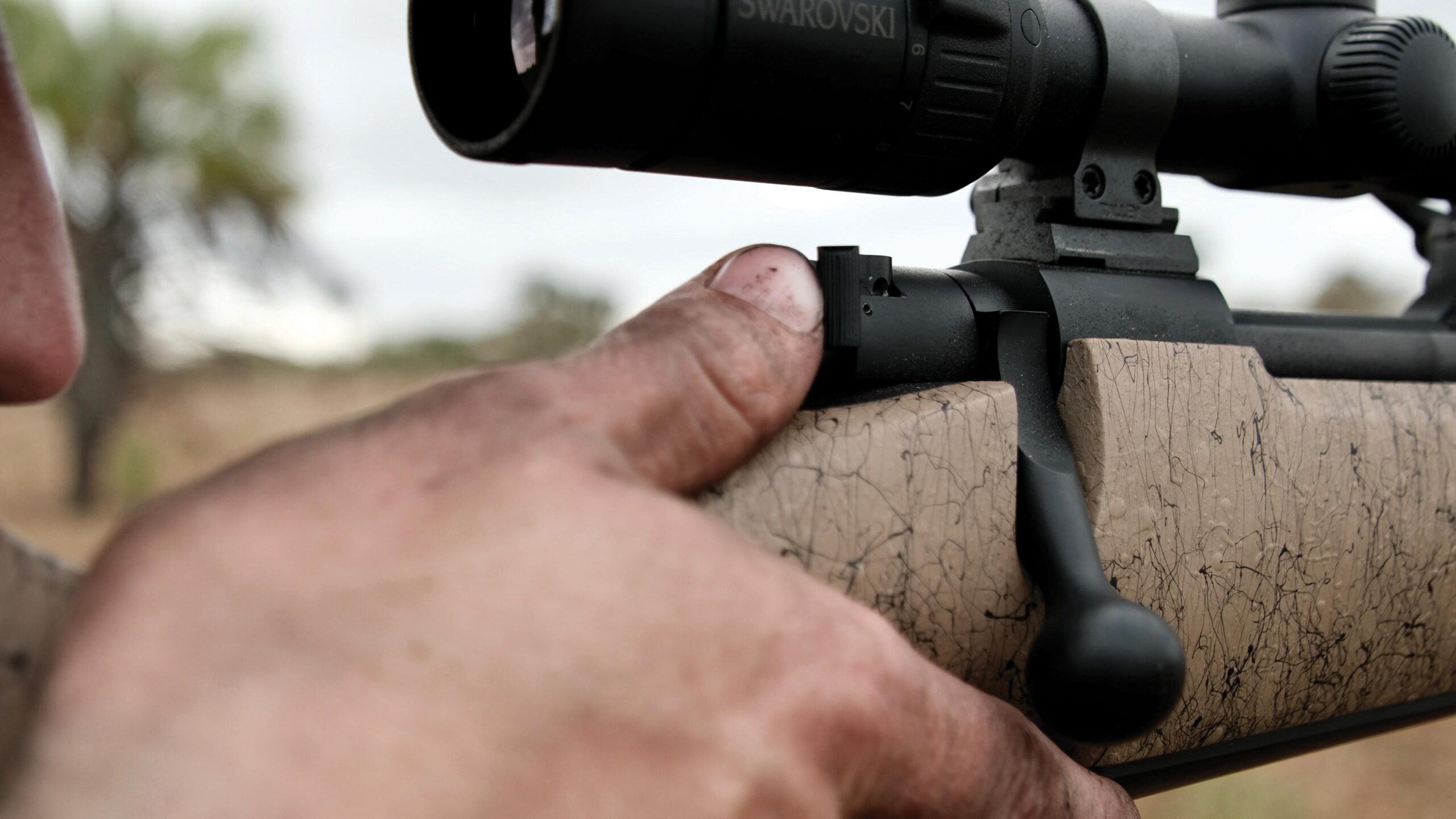
Finally, a weathered, hairless rump appeared behind some cows. Without even seeing the head, I knew it was him. Kyne had seen the same, and we waited in nervous anticipation for the cow in front of him to move. My thumb was applying pressure to the safety, waiting for Kyne to call the shot. The cow eventually took a step forward and I had an open view of the bull standing broadside. “That’s a freaking awesome bull, Jack – take him on the shoulder”, Kyne said. Without hesitation, I steadied the crosshairs as best I could and focused on the sensation of my lungs exhaling. The shot broke the silence, followed by the meaty thwaap of the bullet penetrating the buffalo’s muscular shoulder. The herd erupted and the bull immediately disappeared in the ensuing cloud of dust, but I knew that he was finished. Several seconds later, lingering far to the back of the now departing herd, my bull stumbled in the ash. Two quick insurance shots ended the battle, and the grand old brigadier fell to his final resting place. A hand on my back and the familiar sound of my dad’s voice saying, “You just shot your first buffalo, Jackson”, was all I remember hearing after that, followed by a storm of back slaps and heartfelt bear hugs.
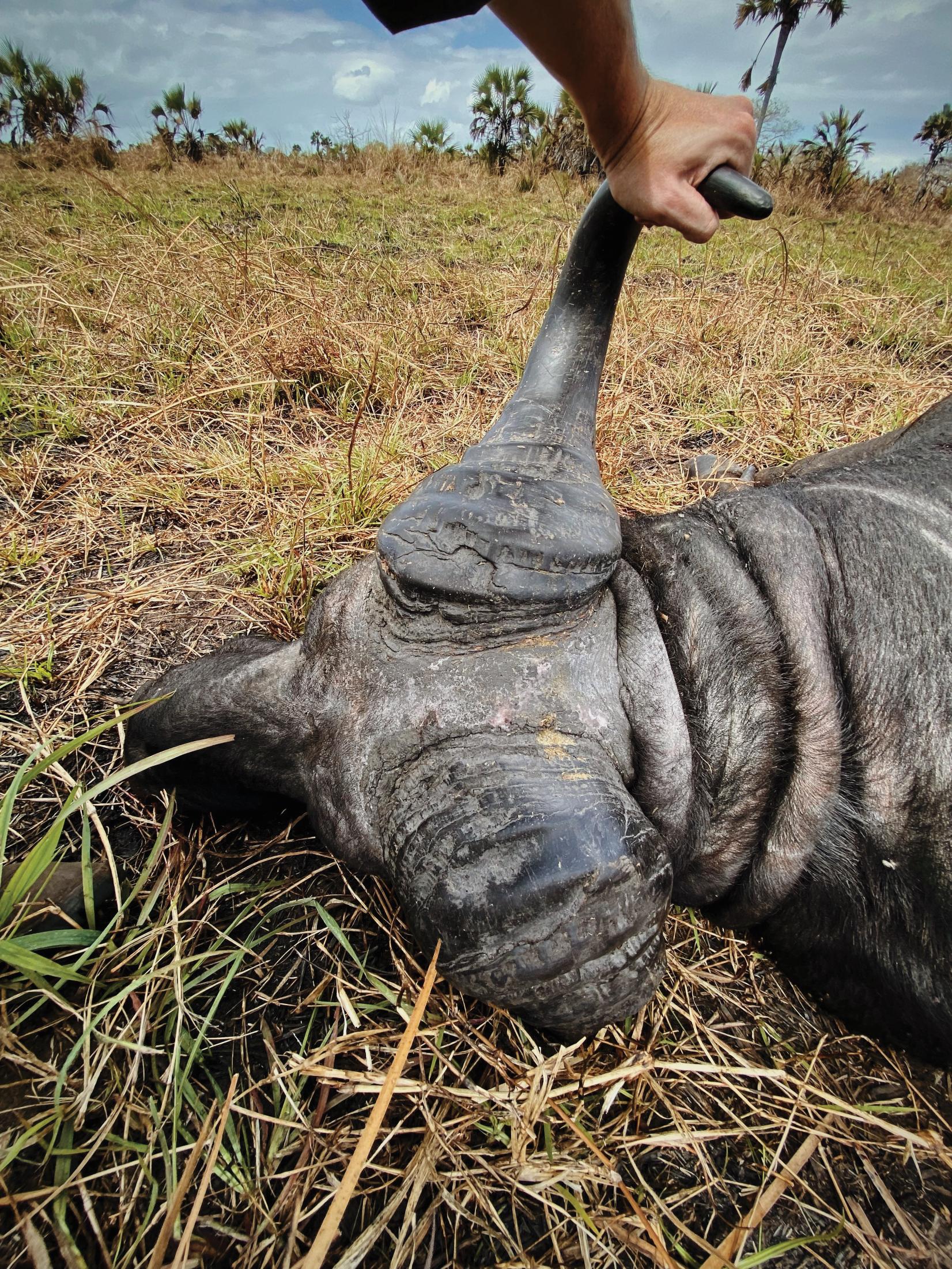
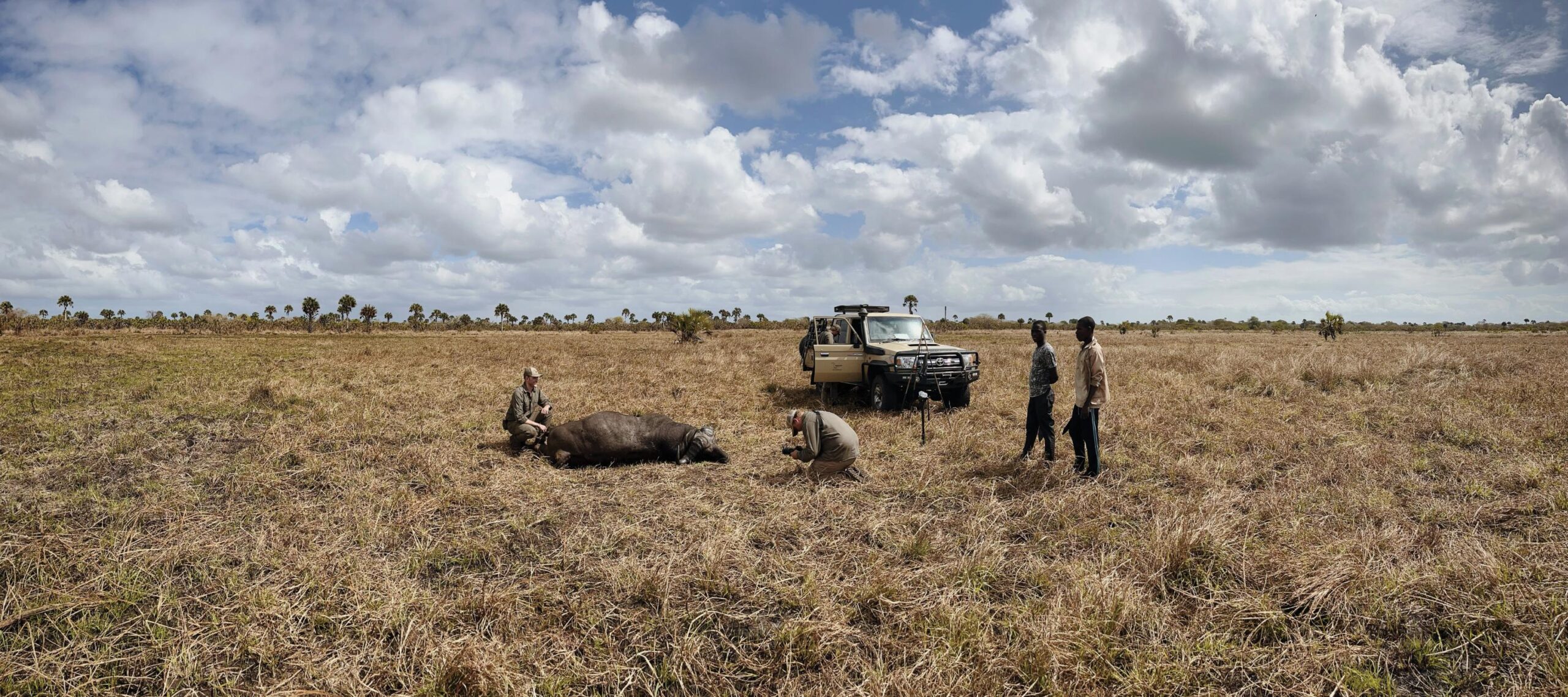
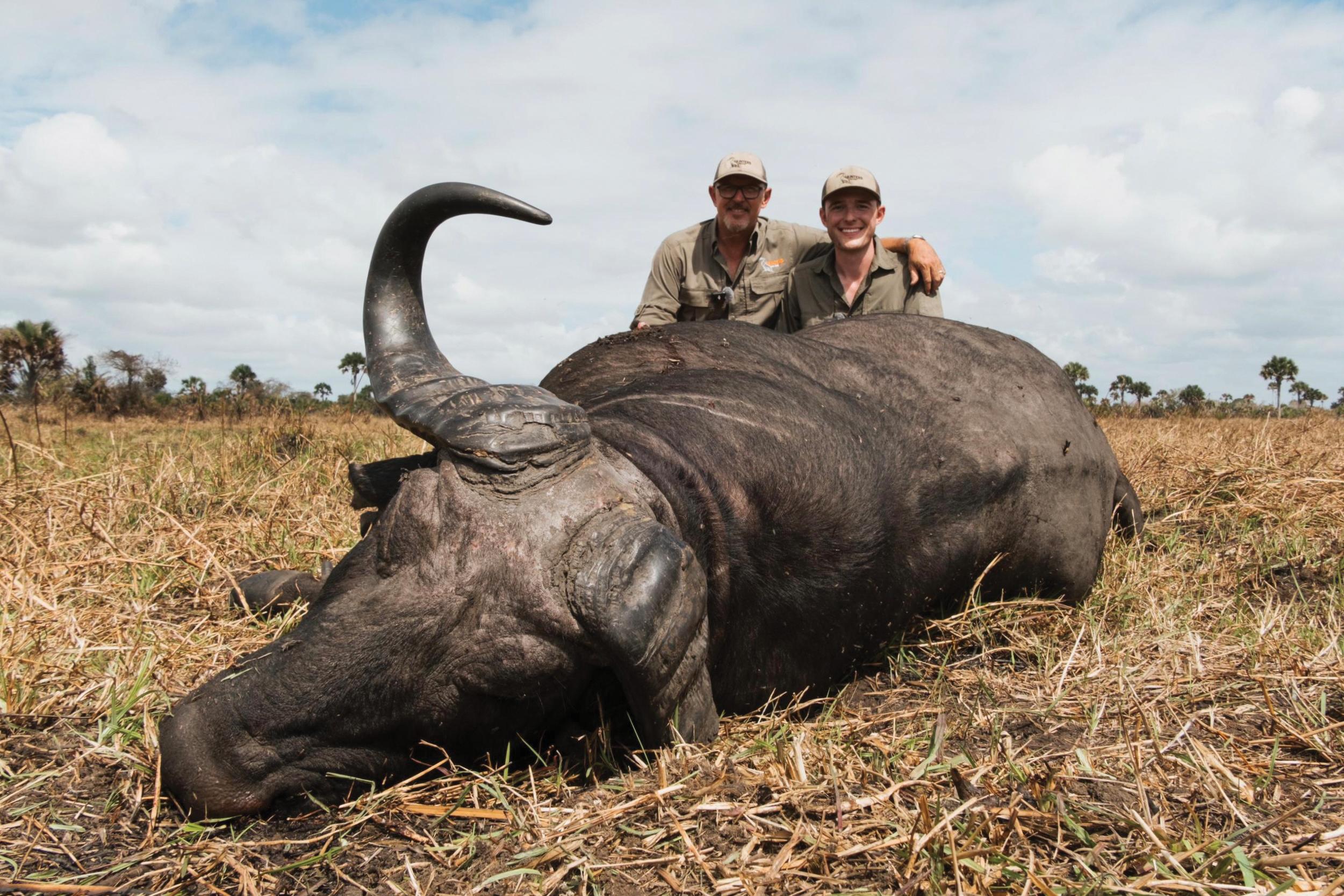
Minutes later, we walked up to the fallen buffalo. What lay before me was truly mind-blowing. From a traditional trophy perspective, the bull was below mediocre and would not stand a chance in any record book, even if he still had two full horns. Yet, the old warrior was more than I ever could have hoped for and exactly what I had dreamt of. His polished bosses reflected the clear Mozambique sky, and the remaining half of his broken left horn was worn into a rounded stump. The gray, grizzled face told the story of a long, well-lived life in what is now one of my favourite places in all of Africa. I then noticed the scar on his ankle from an old snare wound, and another on his throat. It was sobering and angering, as it was a visible reminder of the war on poaching in our area, but it also added to the bull’s story of survival. My dad and Kyne were in just as much awe of the bull’s grandeur, with Kyne calling me the “luckiest bugger alive”. Dad and Kyne encouraged me to sit in quiet reflection before we started the long process of capturing photos and skinning the bull.
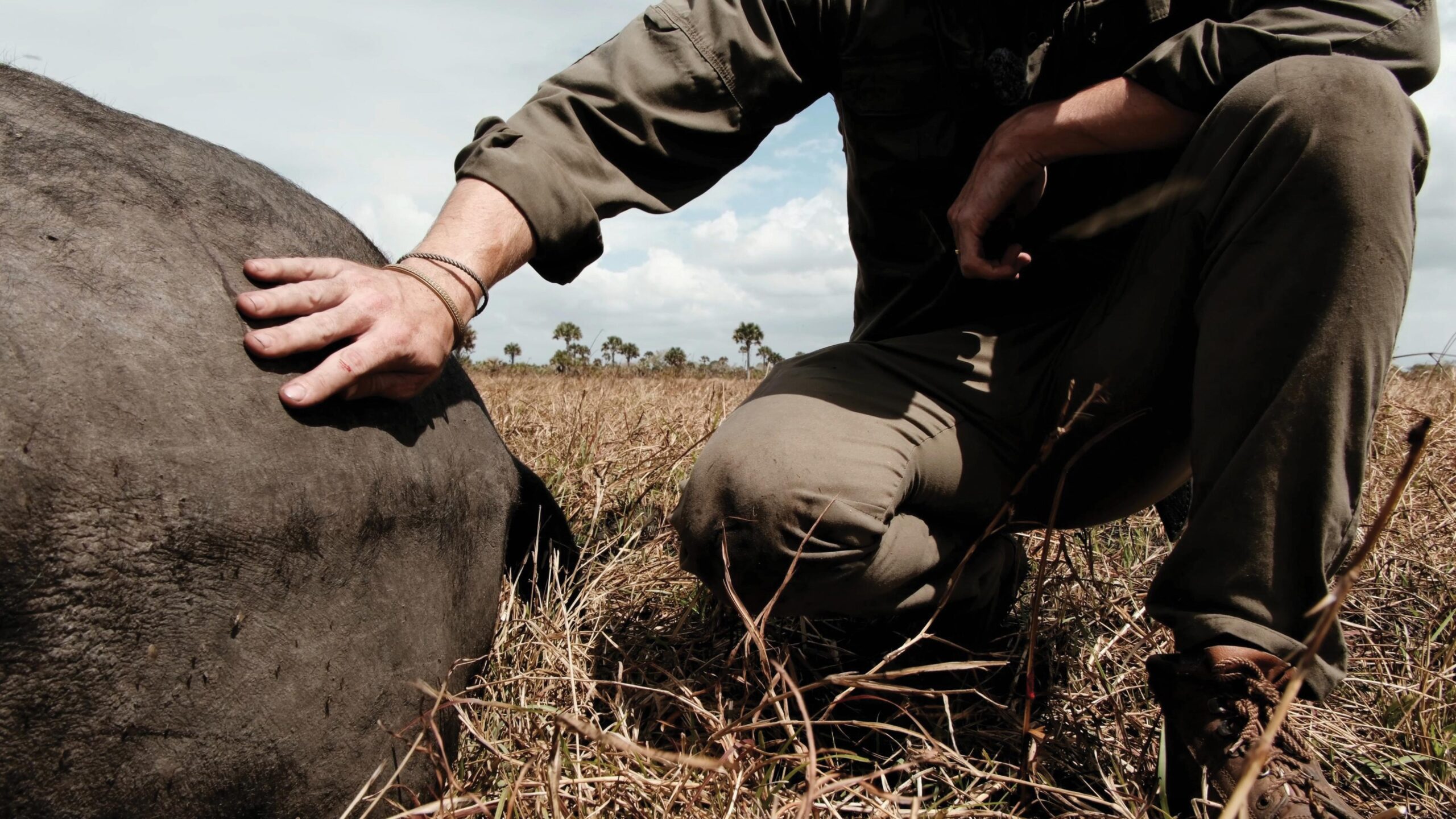
As I sat next to the wizened old nyati, my hand gently stroking its side, I waxed into a state of reverent contemplation. To many, the ethos of hunting older animals is merely a means to justify the conservation benefits of hunting. While conservation will always be at the core of my desire to hunt older animals, there is also an intangible reward that cannot be so easily explained. I believe that old things have a spirit which can be felt by the person holding it, just like old rifles or antique furniture have. Yes, the wear-and-tear and unique visible characteristics tell a more substantive story than something of lesser years, but there is also a more subtle story within those items that is beyond what merely meets the eye. Hunting an old buffalo like this one is no different for me. His battle scars and aged appearance tell dozens of stories, but the untold stories of a long-lived spirit create a lasting soberness that weighs heavily on the discerning hunter.
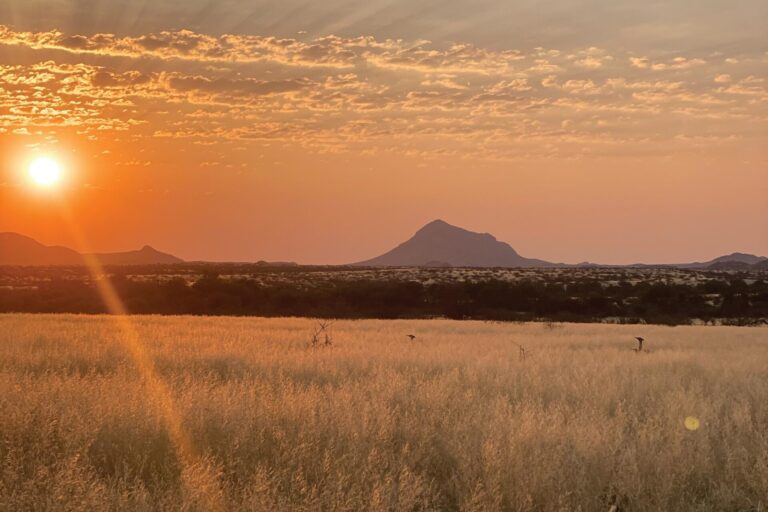
After my time of reflection, we carried on with the other rituals so common to a hunt of this nature: the seemingly endless photos, the countless retelling of the story, and then the preservation of the trophy and the butchering of the great animal. Having already fetched the Cruiser from where it was last parked hours ago, Kyne turned the key only to hear a silent, but deafening click. The battery was flat, and the ground made it impossible to push-start the vehicle. We were now stuck in the middle of nowhere and faced a long wait for help to arrive from camp – a perfect finale to an already unforgettable saga. As the sun began its relentless slide over the western horizon, a fire was lit, and we were hungry.
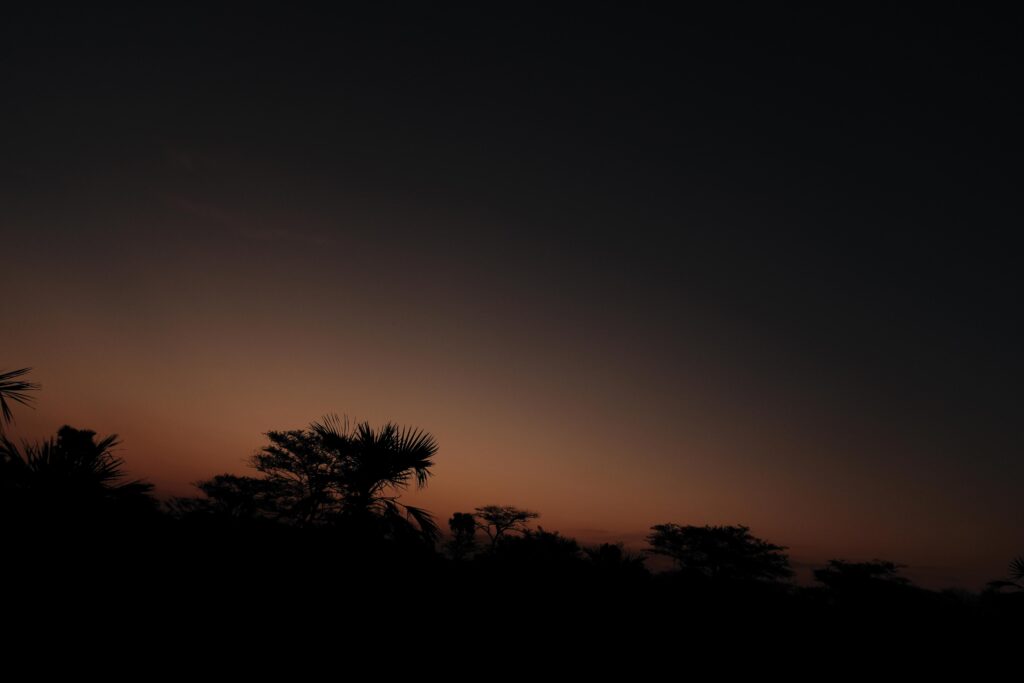
Dusk turned quickly into darkness, and I sat listening to the crackling of the fire under a star-filled sky, looking at my bull’s horns glistening in the flickering light of the flames. The smell of fresh buffalo meat cooking over the open fire evoked my deepest instincts as a hunter. Roughly 175 years earlier, the great Scottish explorer David Livingstone had trekked through what is now Mahimba and at some point likely found himself in a similar setting under the same timeless stars. A day like this has a feeling that one cannot bottle up. It can only be felt by living it, then living it again over and over in our memories. I am eternally grateful to that old dagga boy for beckoning me to this special patch of earth, and for inviting me into one of the greatest adventures a man can experience.