So, what exactly qualifies an animal as a “problem animal”? Freyer emphasises that it is not the species itself that is at fault, but the individual that repeatedly causes harm. A lion that occasionally preys on livestock is not automatically labelled a problem, but one that repeatedly returns to farms or settlements may be. The same principle applies to elephants, leopards, hippos and crocodiles: the programme targets the conflict-causing individuals, not the species as a whole.
Once a report is received, the response process begins immediately. Wardens investigate and verify the incident, then implement appropriate strategies depending on the situation. Non-lethal interventions, such as deterrents or relocation, are preferred, while removal or destruction is only considered as a last resort. The Namibia Professional Hunting Association (NAPHA) is informed through a private WhatsApp group that includes outfitters. This ensures rapid dissemination of crucial information without causing public alarm. “We don’t want the animal to create more havoc”, Freyer notes, highlighting the need for swift action to secure a PH.
Translocation is a key component of this programme. In the northwestern region, for example, a lion was recently captured and relocated to Bwabwata National Park, demonstrating that problem animals are not only hunted but also safely moved to reduce conflict. Each intervention is carefully documented and monitored to prevent recurrence and minimise ecological impact.
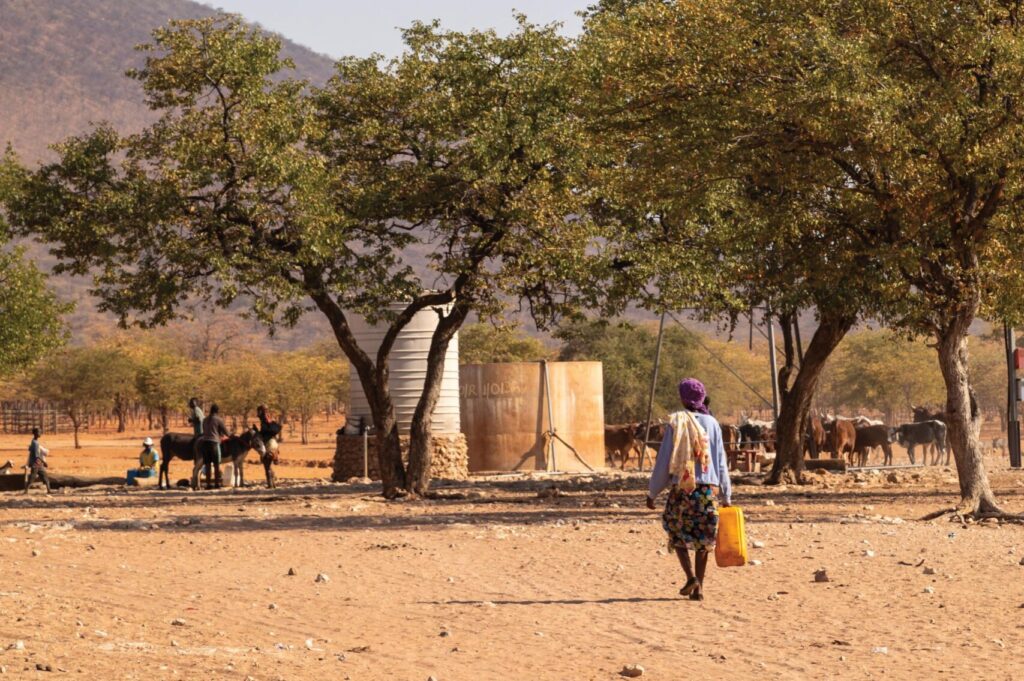
A recent real-life example of where this system worked effectively involved a farmer in the ≠Khoadi-//Hôas Conservancy who lost 35 sheep in a single night. The problem-causing animal, a lion, was removed and hunted, resolving the immediate threat to the community’s livelihood. The programme has not been without its critics. But Freyer maintains that one needs to – put simply – listen. “We must consider people’s side of the story, especially to someone who has just lost their entire income in one go. How do you put food on the table? Get your kids through school? These are the real, tangible hardships and we need to examine both sides of the story.”
For Freyer, working in the field has shaped a perspective that cannot be gained from behind a desk. “It’s easy to make assumptions, if you’re not out in the field. I have been to meetings in communal conservancies. One must listen. It’s always going to be a difficult decision”, he says. “The reality of conservation”, he emphasises, “is that every choice carries weight. Not just for wildlife, but for the people who share the land.”
The Ministry of Environment, Forestry and Tourism’s mandate has always been clear: to conserve wildlife while prioritising communities. “We need our conservancies. The one cannot exist without the other”, Freyer explains, underscoring the interdependence of healthy ecosystems and thriving local communities in Namibia.