Standing Together:

Securing the Future of Ethical Conservation Hunting in Namibia

by Kristin Maritz

Namibia’s hunting community stands at a pivotal juncture. For five decades, professional hunters, trackers, operators, conservancies and rural partners have protected wildlife and ensured that land remains dedicated to conservation. Our model, grounded in ethical hunting and sustainable use, is recognised worldwide as one of the most successful conservation systems. Yet today, we face increasing external pressure from anti-hunting activists, misinformation campaigns, international policy interference and transport restrictions. These groups present a united front and do not distinguish between ethical and unethical hunting, between a conservancy and a freehold farm, or between a professional hunter and a conservation biologist. Their aim is absolute: to end hunting entirely.

At the same time, internal division does more harm than we often realise. While anti-hunting lobbyists coordinate their efforts, our sector sometimes allows personal differences or competition to undermine the broader vision. Unity is not simply desirable – it is essential. Without it, even the strongest conservation model can be weakened. Together, however, we hold enormous strength. Namibia’s success did not come from isolation or individual voices, but from collaboration, science-based wildlife management and a shared conviction that wildlife must have value if it is to survive.

Ethical hunting remains central to this success. It ensures that wildlife is protected and managed responsibly, that land stays under natural habitat instead of being converted, and that rural livelihoods are supported. Trophy hunting alone contributes approximately N$350 million annually on freehold lands, forming part of a tourism sector worth more than N$2 billion. These funds support conservation programmes, anti-poaching units, research, habitat management and community benefits. Thousands of jobs exist because ethical hunting exists, from professional hunters and trackers to taxidermists, hospitality staff, mechanics, pilots and artisans. When conservation produces tangible economic value, wildlife thrives. When it does not, poaching, habitat loss and humanwildlife conflict increase. Countries that have banned hunting, such as Kenya, have seen severe declines in wildlife populations, proving that funding for conservation must be practical, sustainable and rooted in reality.

Namibia’s future hunting professionals are central to safeguarding this system. Many already possess natural skills in tracking, understanding wildlife behaviour and navigating our environment. With proper training, mentorship and ethical grounding, they become ambassadors for sustainable wildlife management. Becoming a hunting professional is not simply a job: it is a meaningful career, offering financial stability, opportunities for entrepreneurship, and the chance to contribute directly to the conservation of our national heritage. Importantly, it is a path open to those with dedication, discipline and a passion for nature.

“The message is simple and clear. Namibia’s conservation hunting model works. It protects wildlife, sustains rural economies and preserves our natural heritage.”

Training remains a cornerstone of our profession. From theoretical and practical examinations to specialised courses in butchery, caping, photography, first aid and field techniques, we continue to build competence and confidence. Over recent years, additional emphasis has been placed on training Previously Disadvantaged Namibians, because sustainable conservation must be inclusive. Involving a broad range of Namibians strengthens public understanding of the role of hunting and ensures that our conservation model is supported and understood across society.

NAPHA has upheld the interests of the hunting community since 1974. Founded by a group who recognised the importance of unity and collective representation, NAPHA has grown into a respected organisation both locally and internationally. Today it plays an active role in policy discussions, member support, training, regulatory engagement and defending Namibia’s conservation record in the media and at global forums.

From working with MEFT on leopard tag processes and engaging in the National Spatial Master Plan with FENATA to assisting members with airport firearm procedures, NAPHA consistently advocates for practical solutions and fair regulatory systems. Our representation at major hunting shows in Germany, Austria and the United States continues to position Namibia as one of the world’s leading ethical hunting destinations.

Ethics remain central to everything we do. A single unethical act damages not only an individual reputation, but also the perception of all hunting professionals. Upholding ethical standards protects our collective credibility, ensures sustainability and maintains public trust in our conservation model. It is our duty to ensure that every member and every training candidate understands that responsibility.

Knowledge must also be passed on, and experience must be shared. History is filled with examples of important knowledge disappearing when it is not transferred to the next generation. The same could be true for professional hunting. If we do not guide, encourage and mentor future leaders, we risk losing skills, traditions and values that have supported Namibia’s wildlife for decades. Our future depends on the young hunters and aspiring professionals who are stepping forward today. They are not competitors – they are the continuity of our conservation legacy.

The message is simple and clear. Namibia’s conservation hunting model works. It protects wildlife, sustains rural economies and preserves our natural heritage. However, it requires unity, professionalism and unwavering ethical conduct. Our strength lies in standing together, supporting one another and speaking with one voice. The challenges we face will not disappear, but united we will continue to lead the world in ethical, sciencebased conservation hunting.

The time for division has passed. The future belongs to those who collaborate, uphold high standards and remain committed to sustainable use. Namibia’s hunting professionals are custodians of the land, protectors of wildlife, and ambassadors for a system that balances human needs with nature’s wellbeing. With unity, integrity and pride in our profession, we will ensure that ethical hunting in Namibia remains strong for generations to come.

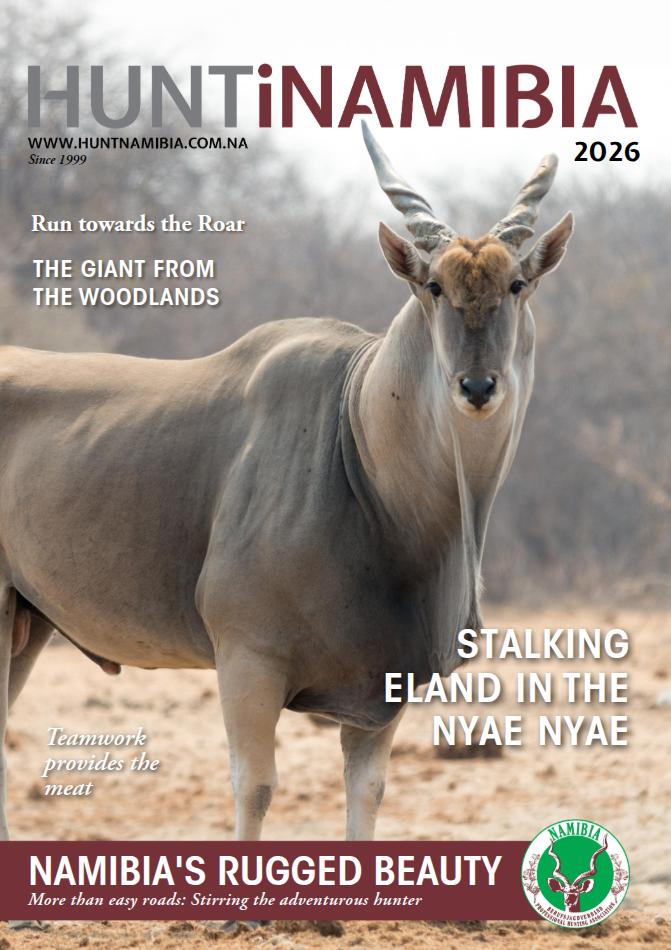
From the 2026 issue of Huntinamibia

Our Partners

Related posts

Securing the Future of Ethical Conservation Hunting in Namibia

Namibia’s hunting community stands at a pivotal juncture. For five decades, professional hunters, trackers, operators, conservancies and rural partners have protected wildlife and ensured that land remains dedicated to conservation. Our model, grounded in ethical hunting and sustainable use, is recognised worldwide as one of the most successful conservation systems.

Read More »

A million little things

Hunting for me goes beyond the obvious, beyond the daily grind and the collecting of trophies. Even beyond the now hackneyed phrase of “collecting memories” ‒ something probably nobody can really define. Once you allow yourself as a hunter to actually and consciously take in moments and breathe in air,

Read More »

The giant from the woodlands

We were kneeling in the hot sand. It was early April, yet the sun was burning down on us mercilessly. Poldi was sitting behind me. It was his second visit to Namibia and therefore he now knew that in Africa, too, the scorching heat and biting flies do come to

Read More »

Read the full 2026 issue