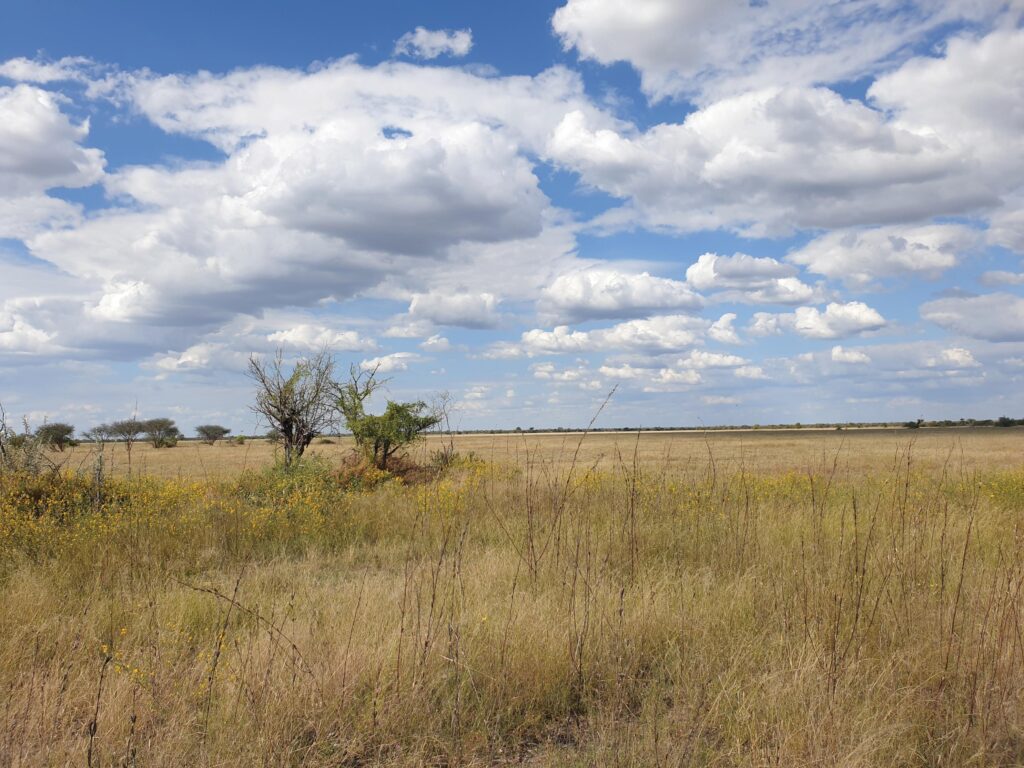
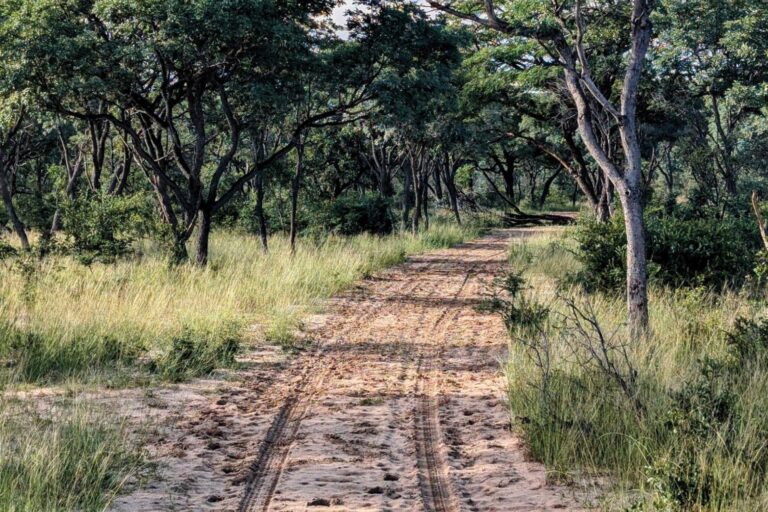
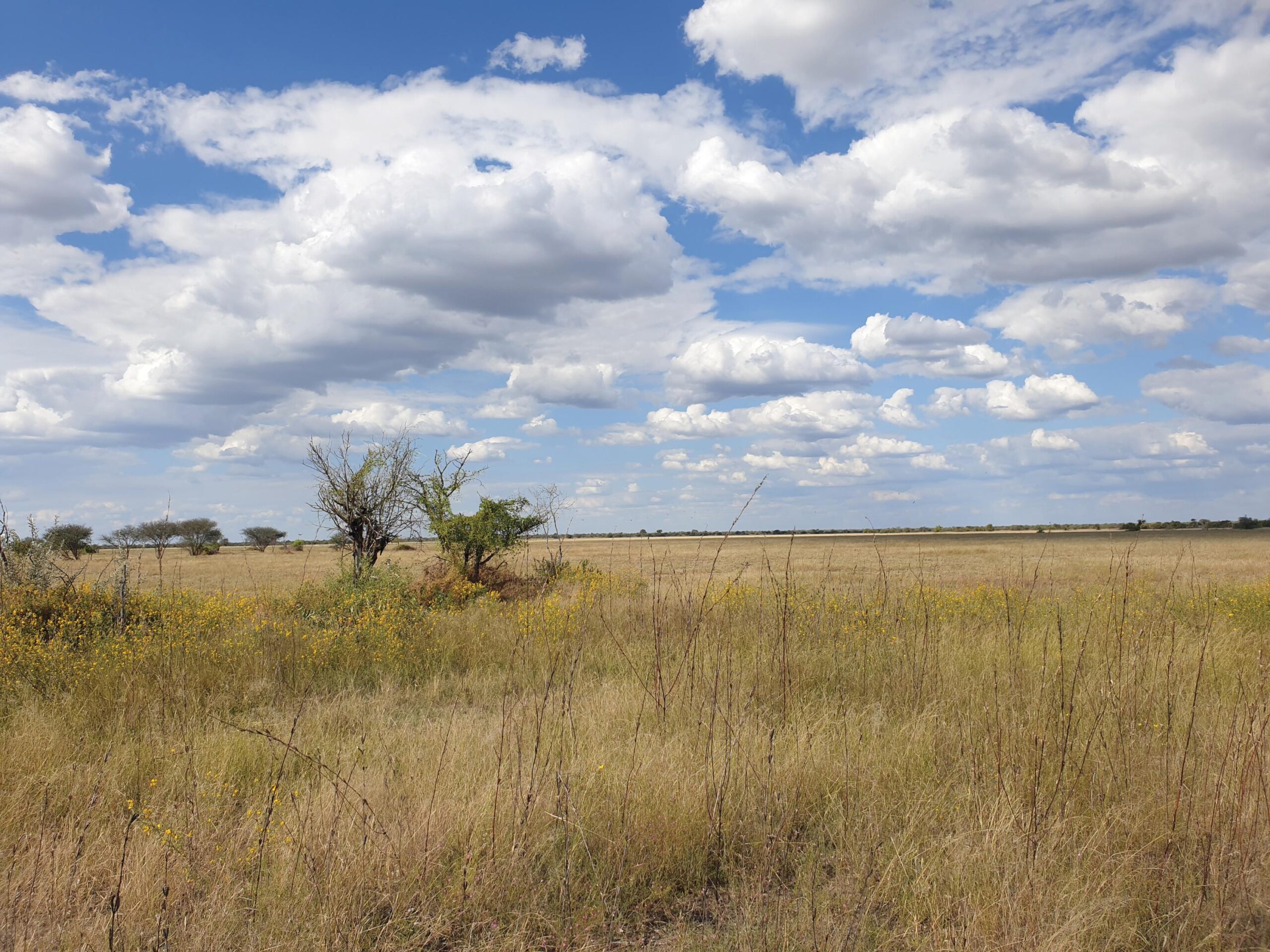
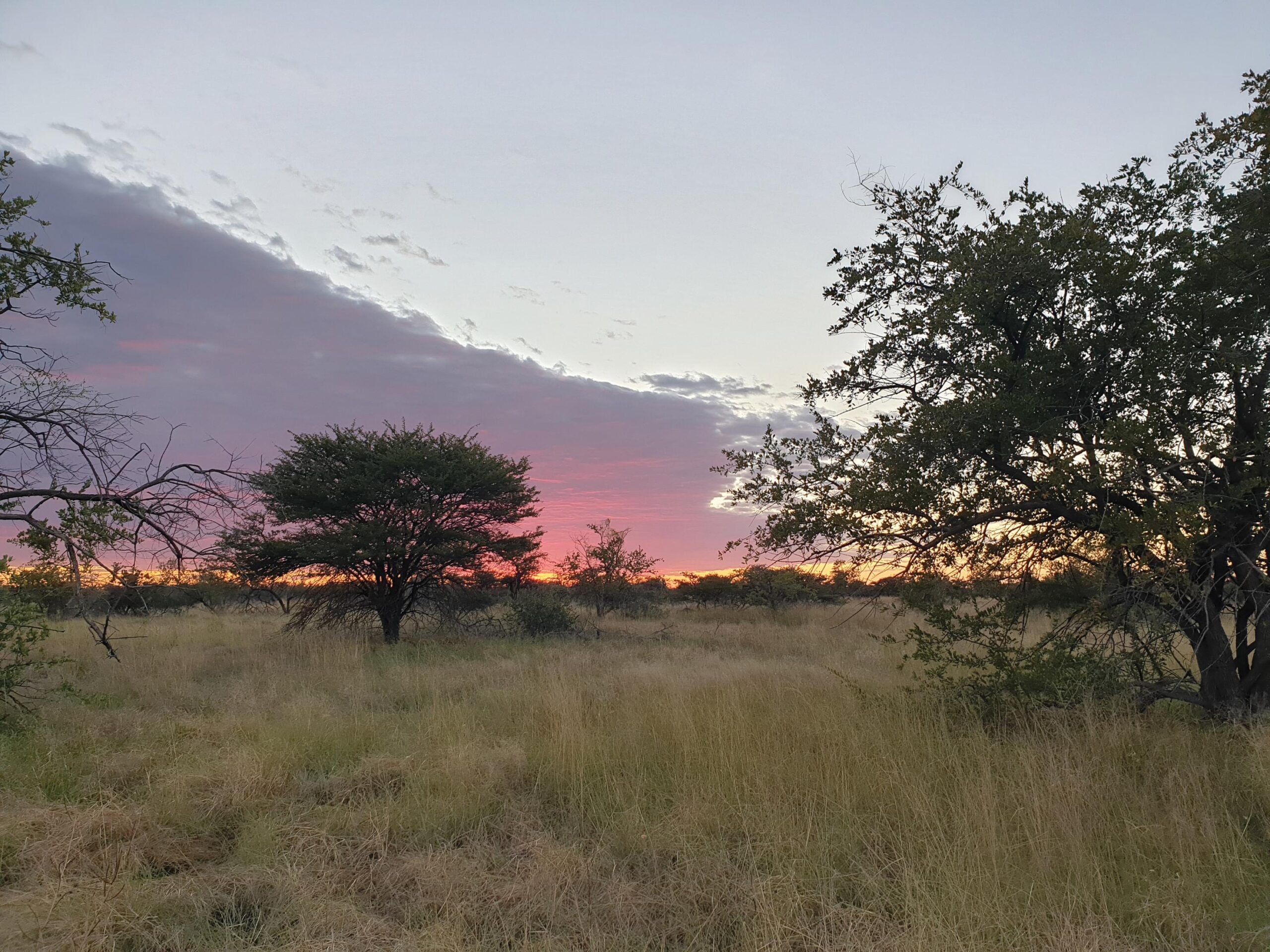
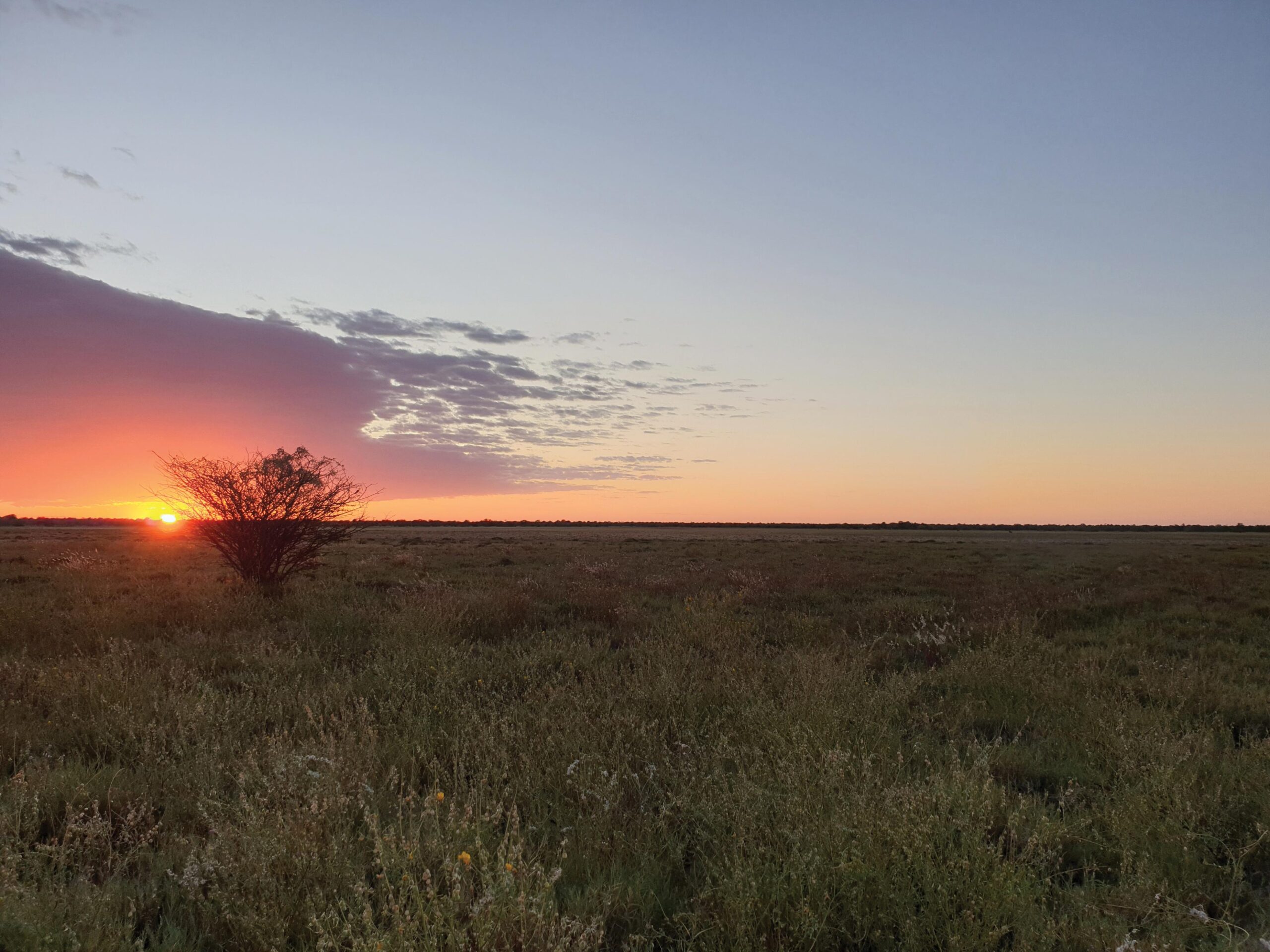
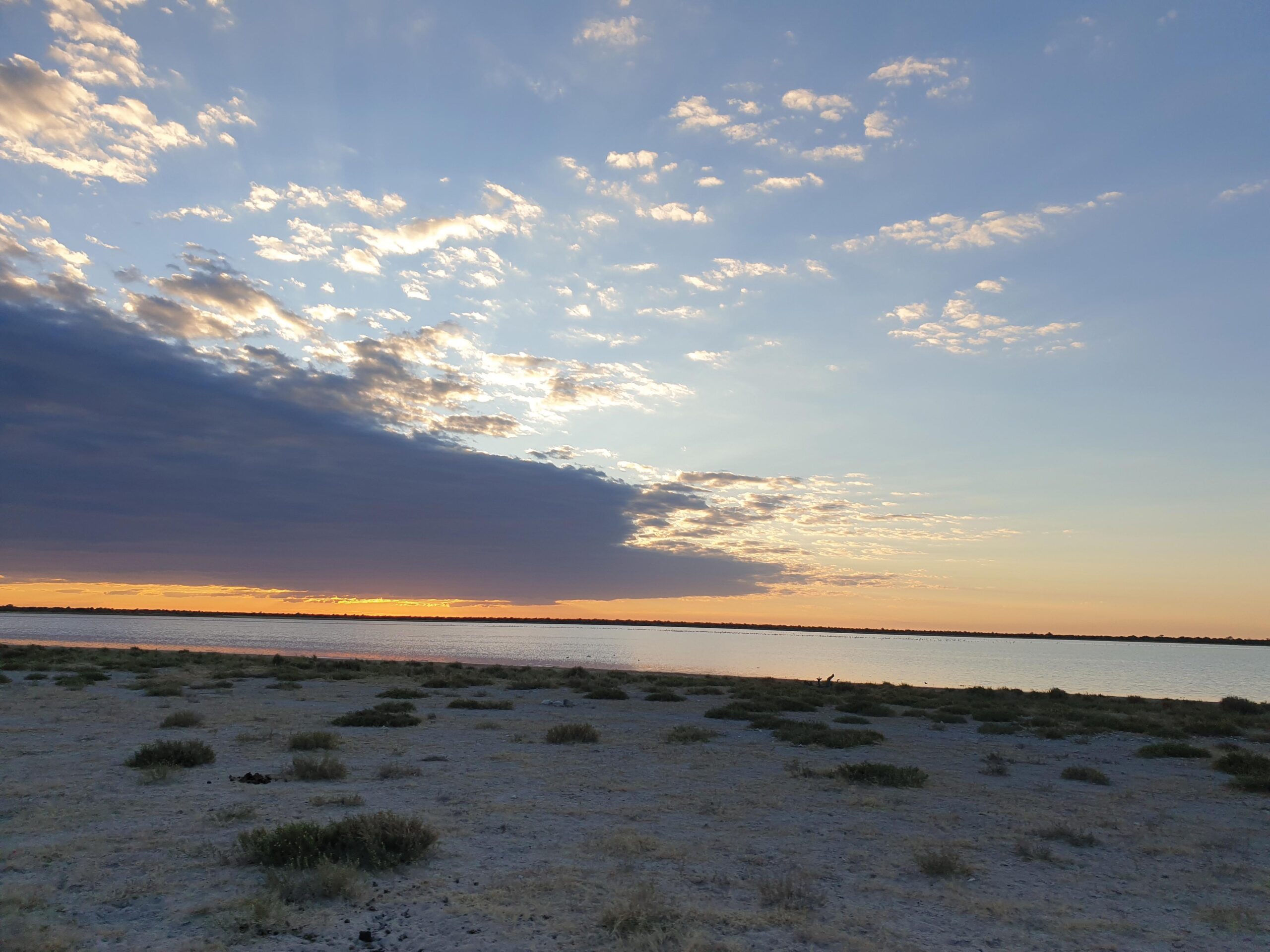
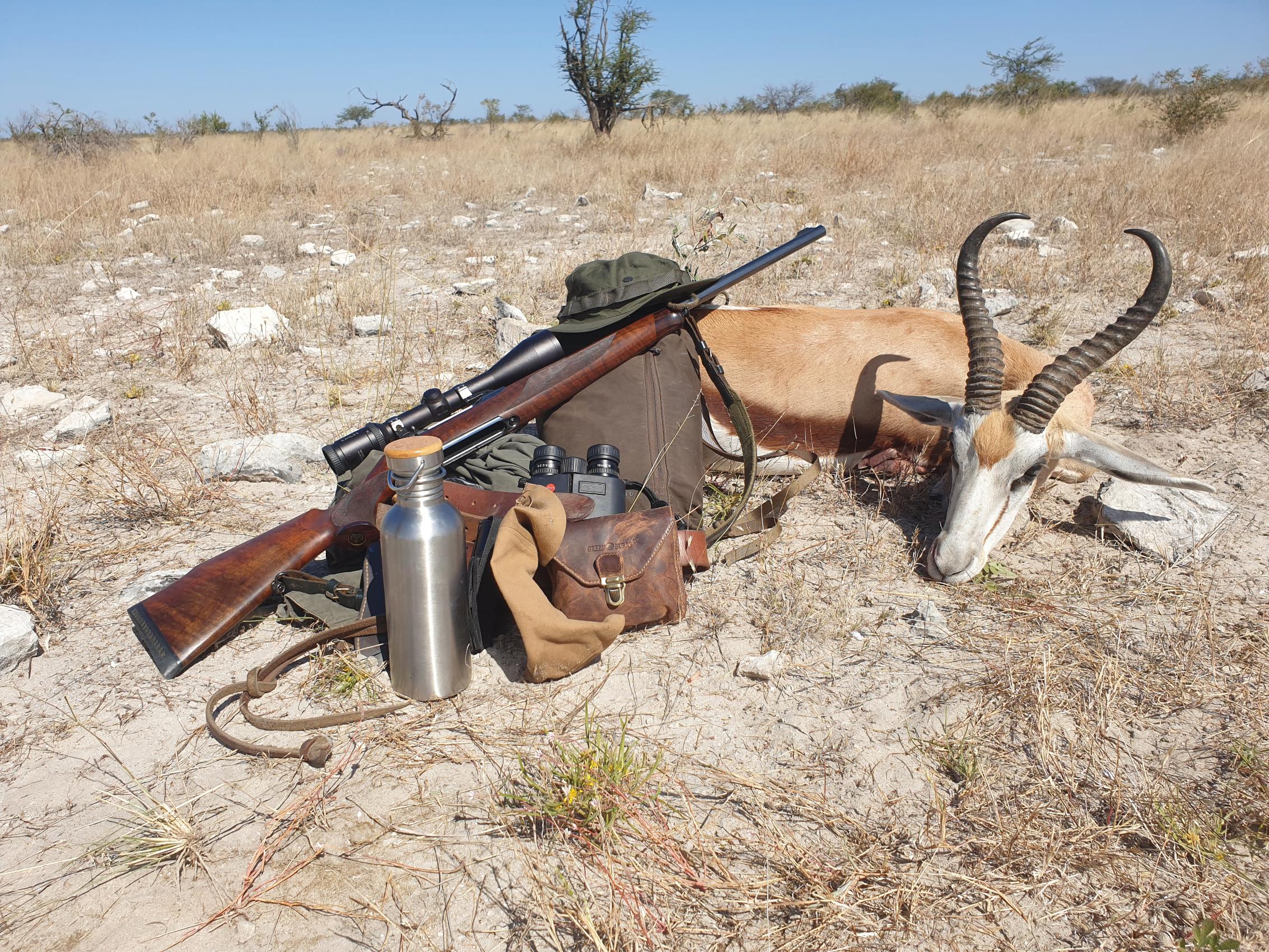
In May everything is green, and it was especially so after the good rains which in 2025 continued well into March. Even while I was there, we still had showers as we worked our way north through Hereroland, always along the course of the Eiseb River. The fresh leaves and the availability of water got the elands to move even more, making them all the more elusive. But the pans were full, attracting countless ducks, geese, flamingos, waders and other wildlife. That sight was definitely worth the compromise in tracking eland.
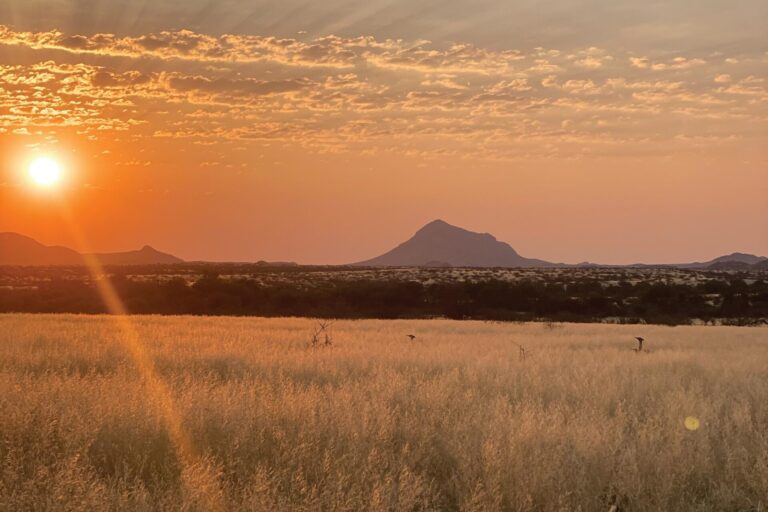
The sheer size of the area alone demanded a great deal from our team in terms of hunting. The tranquil rhythm of returning to camp for lunch and a siesta after a morning of stalking is simply not possible here. When the infinite sky started to turn orange at dawn in its unfathomable grandeur, with no buildings on the horizon and no vapour trails, we were already stalking towards the pan, hoping to find fresh eland tracks.
At midday, a rest under trees, or sometimes just low bushes, gave us the chance to rest our legs for a while. We then shared our lunch, closed our eyes as the sunlight shimmered through the leaves and branches above us. I wrote in my diary, looked up the bird species encountered that day in a small field guide and rolled a cigarette. In the afternoon, when the sun dropped slightly from its zenith, we continued until the light faded, and we finally returned to camp long after sunset.
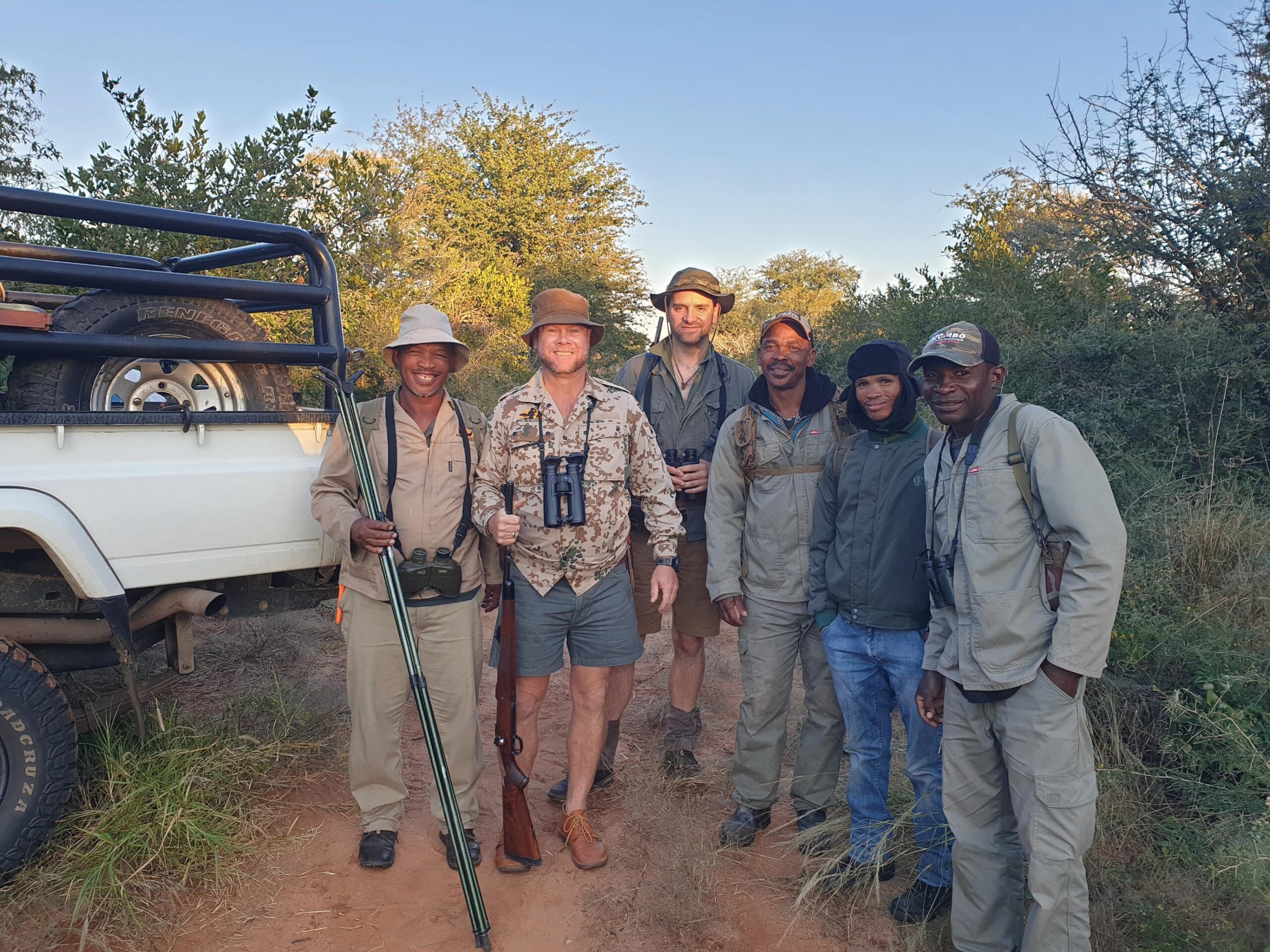
Our hunting party represented quite a good cross-section of Namibia’s ethnic diversity. With us were Ju/’Hoansi, of course, but also Nama/Damara and Ovambo. The professional hunter was of German descent and his guest came from that same country.
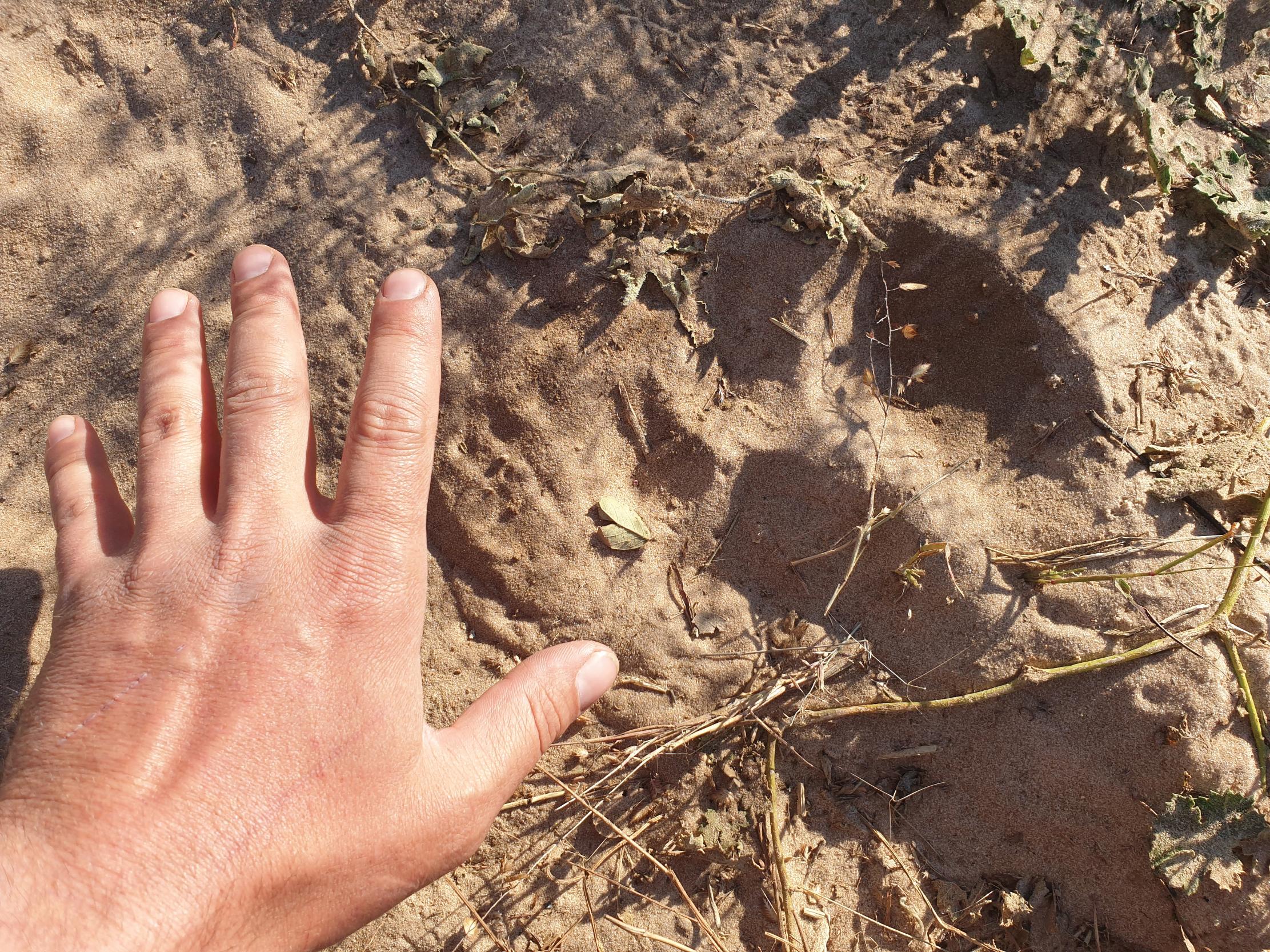
On the very first morning, as we quietly and cautiously approached the pan, Joshua pointed between the branches in front of us. Perhaps 300 metres ahead of us stood eland bulls, a good dozen of them. It soon became clear that they were bachelors, younger bulls not yet dominant in a herd, and three that had already achieved that status long since. One of them was an incredibly massive, blue-hued, truly old bull.
Everyone was wide awake now. I, at least, had not expected such a sight so quickly. We silently circled closer, approaching cautiously, all the while glassing, able to vaguely make out the animals through the branches.
Suddenly, Otto, the lead tracker, jumped back. “Slang!”(snake), he hissed, but after a second look waved it off casually. “Just a python.” A little later, we saw a good roan bull disappear into the bush. But we couldn’t catch up with the elands. Our trackers seemed convinced: it was the snake’s fault. The next morning, we again found fresh tracks and worked our way forward, but we had to realise that Khaudum had taken the elands under its protective wing. To reduce pressure on the area and, also, to experience the magnificent landscape, we decided to shift to its southern part, characterised by pans and open grassy plains, the next day. There I hoped to find the second quarry that particularly fascinates me in this region: the blue wildebeest.
Since two of the trackers had been reassigned, Kosta stepped in. He is Ju/’Hoansi and one of the communal game guards in the area. Initially he was very shy, didn’t speak or point out much, and kept in the background. Now that our group had become smaller, I noticed how he became more and more confident, whereas before he just hadn’t wanted to push himself into the spotlight. He revealed deep knowledge of the entire concession and proved himself a truly accomplished tracker.
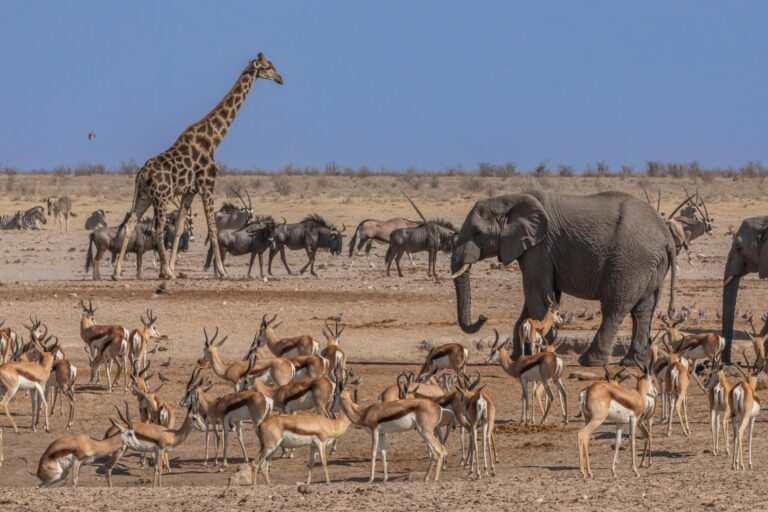
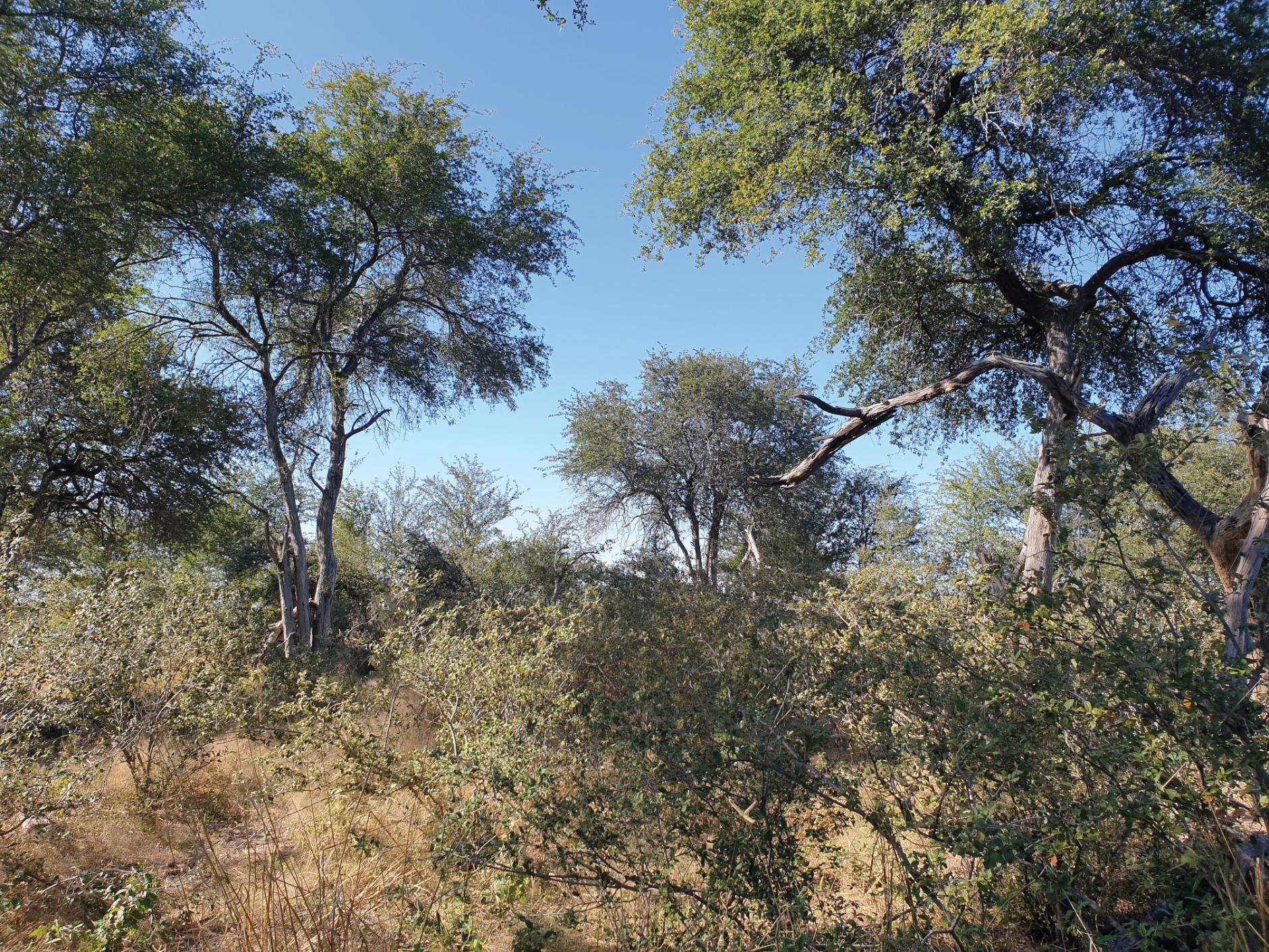
Damp grass, full of horseflies and mosquitoes, brushed against our legs for hours. We had spotted wildebeests far out on the plain, along with plains zebras and springbok. Now we had to circle the large pan to approach them downwind. We worked our way through dense thorny bushes, glassing and taking time to assess the situation. Axel delighted me with the same conclusion which I had already been considering secretly: The wildebeest that we could see were way too far out – and we did not want to disturb their peace.
Just as we prepared to circle the pan with as little disturbance as possible, a lone wildebeest bull rose only a short distance away, perhaps 300 metres. He had been lying behind a bump in the ground. We exchanged a few words – and then a stalk began like in the old days. Heart pounding, I fell in line behind Axel, followed by our trackers Tonnetjie and Kosta. Hunched low, we moved in toward the bull in the visual shade of a tree and with favourable wind. Lappet-faced and White-backed Vultures began to circle as if sensing fate. A jackal peered over to us. In a moment like this you become aware of so many things at once: the heat, the scent of the savannah, the towering clouds, the thrill of the hunt. At the same time, I felt transported back to a wildlife documentary from my childhood, and I was overjoyed to be able to be here.
The groups of wildebeest further away didn’t take any notice of us as we moved bunched together, without typically human silhouettes. Down on our backsides, inching forward little by little, we covered the last hundred metres to a tiny bush that was to offer some cover. When after a final look through the binoculars it had become clear to all of us that this was a truly old bull, the hunting fever fully set in. Very slowly we rose, placed the rifle on the sticks and edged out from behind the bush. From now on, with the rifle at the ready, the advantage was on our side. The long-yearnedfor success had become tangible.
Alas, our bull remained lying down. Axel started to whistle. No, that would be an understatement. He went through the possibly most remarkable series of whistles in the more recent African hunting history. A good two hundred times he produced a bright, crystalclear tone while I couldn’t even get out a single one – my mouth was that dry. But our wildebeest didn’t seem to register the sounds at all, he just continued dozing.
Axel added “Hey!” to his whistling, first quietly, then increasingly louder. During the quarter of an hour that we had been standing tensely at the ready, I repeatedly went through the upcoming process in my head: firmly retract the stock and pull the trigger cleanly… but at the decisive moment my body took over.
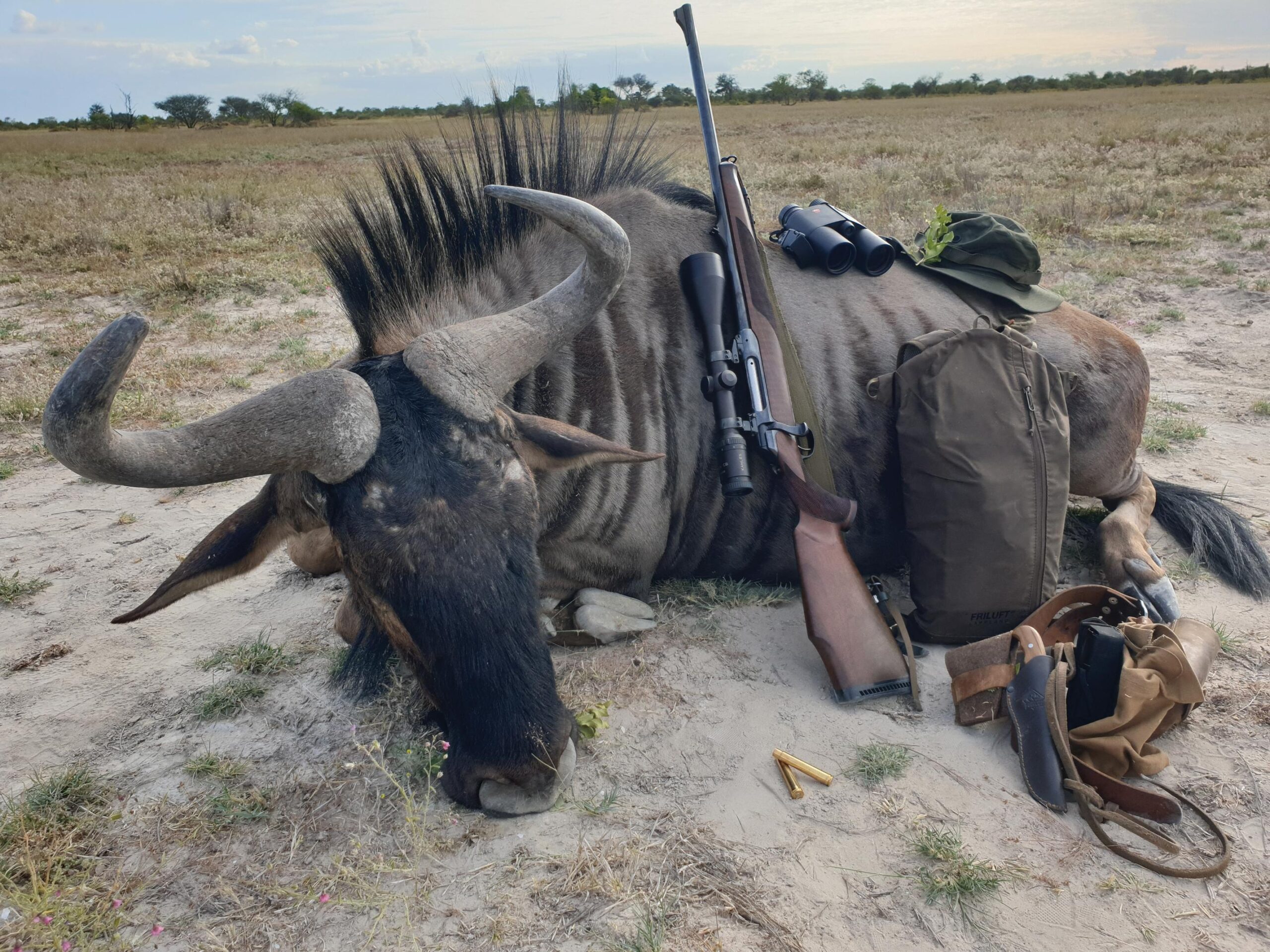
Like cattle do, the bull suddenly lowered his head and heaved up his shoulders. “Now,” Tonnetjie whispered excitedly. In a small cloud of dust, the bull pushed himself up and immediately turned half-pointedly towards us to assess the sound. Intuitively I went for “Daktari” Robertson’s point, divided the angle of his forelegs, aimed a little higher to account for the distance of about 150 metres, and touched the trigger. In the cracking thunder of the .375 Holland & Holland, the bull reared up and ran in a semicircle towards us with his head down, but remaining on his feet. At my PH’s instruction he received a backup shot on the chest to be on the safe side, and there he collapsed. Later it turned out that the first TSX had already pierced the humerus and behind it, the heart.
Now all the tension was falling away and we approached our wonderful bull. At least 15 years old, he was close to the life expectancy that his species can possibly achieve in this land of lions and hyenas.
There is nothing I enjoy more on a safari than the hours that follow the hunt. The joyful return to camp, the smiling faces around us, the dirty shirts as all of us pull the wildebeest from the hunting vehicle and cut it up. A few cigarettes for the skinners were passed around, jokes were shared, and again and again I proudly looked at the old warrior and the many meals he would provide.